Introduction
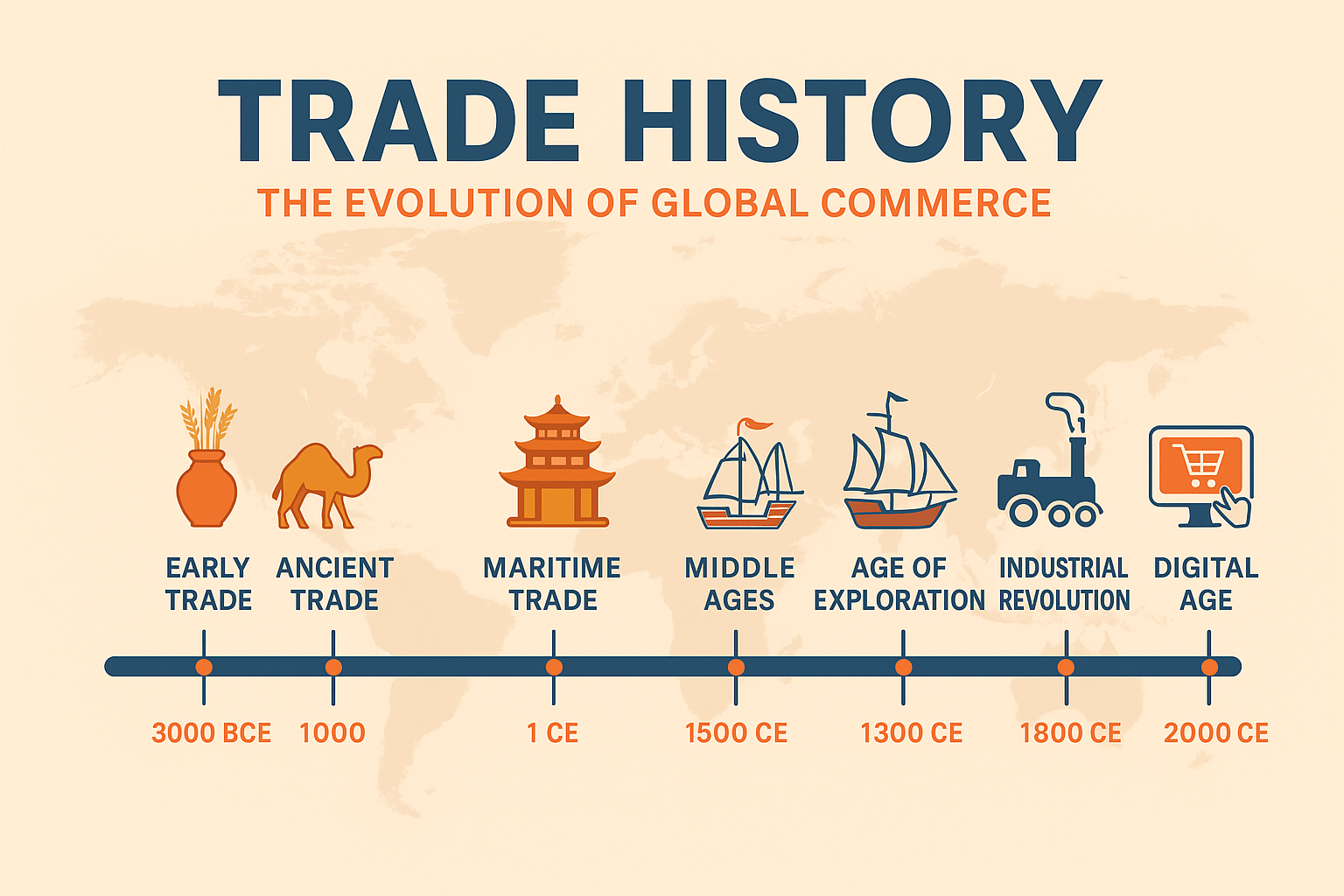
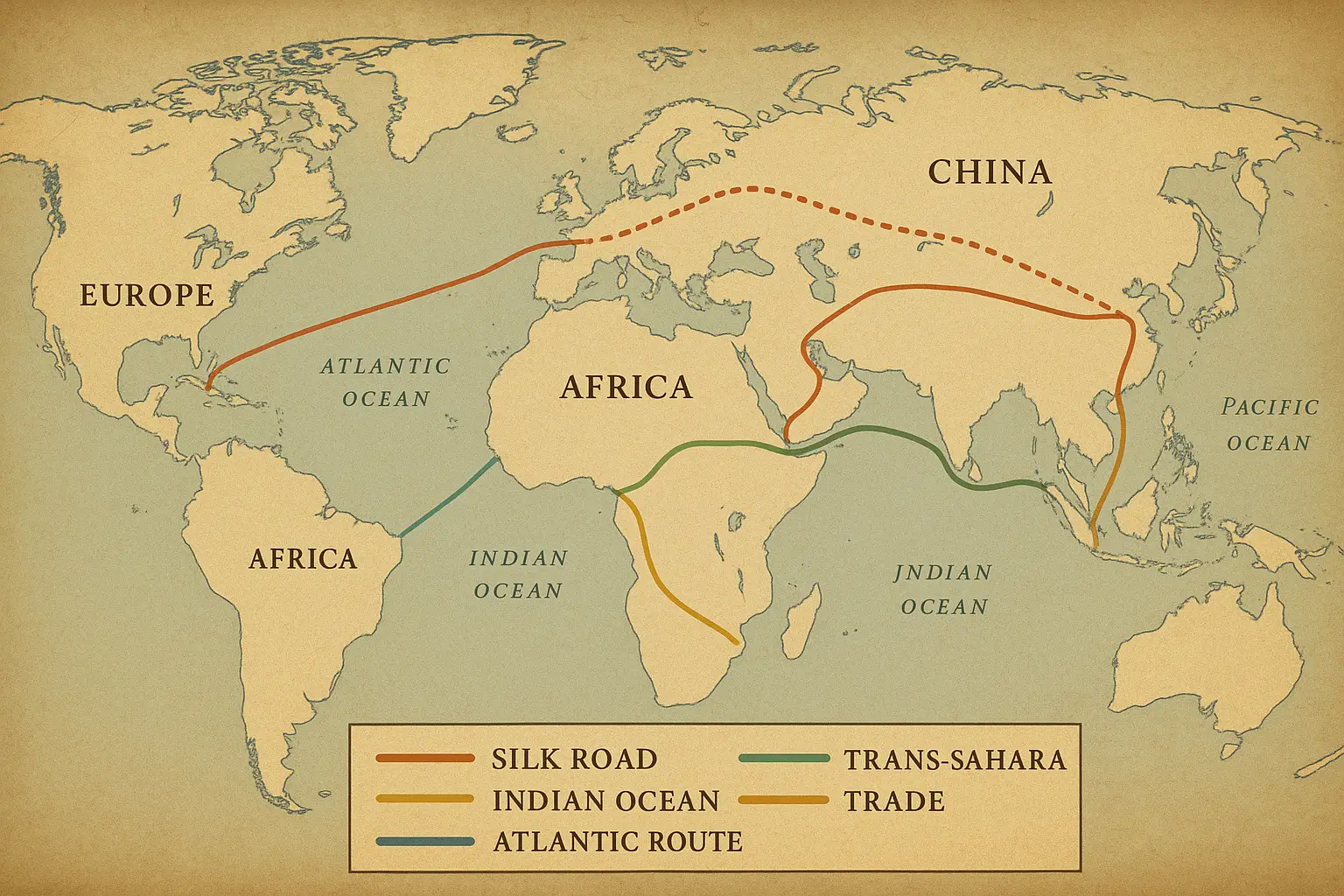
Long before the digital age connected continents with fiber-optic cables and satellites, an ancient network of roads and caravan routes united civilizations across thousands of miles. Known collectively as the Silk Road, this vast trading network linked China, Central Asia, the Middle East, and Europe for over 1,500 years.
Though named after one luxurious commodity, silk, the Silk Road carried far more than goods. It was the world’s first global exchange system — a conduit for ideas, religions, technologies, and cultures that profoundly shaped human civilization.
This article explores the origins, evolution, and influence of the Silk Road, revealing how it became the beating heart of ancient trade and a lasting symbol of cultural connection.
Origins of the Silk Road
The story of the Silk Road begins in ancient China, during the Han Dynasty (206 BCE – 220 CE). Chinese silk — prized for its beauty and rarity — had already reached distant lands like India, Persia, and even the Roman Empire through indirect trade.
However, it was under Emperor Wu of Han (r. 141–87 BCE) that China formally opened routes to the West. The emperor dispatched Zhang Qian, a diplomat and explorer, to establish contact with Central Asian kingdoms. Zhang’s expeditions laid the groundwork for a vast trade network that would later become known as the Silk Road, a term coined much later in the 19th century by the German geographer Ferdinand von Richthofen (Seidenstraße, meaning “Silk Route”).
At its height, the Silk Road stretched over 7,000 kilometers (4,300 miles) — from Chang’an (modern Xi’an, China) through the Taklamakan Desert, Samarkand, and Bactria, all the way to Antioch and Constantinople (Istanbul).
This network was not a single road but a complex web of land and sea routes, connecting the East and West in ways previously unimaginable.
What Was Traded: The Flow of Goods
Although silk gave the route its name, it was just one of countless commodities exchanged along this transcontinental corridor.
From East to West:
- Silk, the most prized export, symbolized status and luxury in Roman and Byzantine societies.
- Porcelain, jade, and paper from China were highly sought after.
- Spices such as cinnamon and ginger, as well as tea, became major exports.
From West to East:
- Glassware, wool, and metalwork from the Mediterranean.
- Precious stones like lapis lazuli from Afghanistan and turquoise from Persia.
- Horses from Central Asia, particularly the famed “Heavenly Horses” of Ferghana, were especially valued by Chinese emperors.
The Silk Road thus became a two-way exchange of wealth and resources, enriching both traders and the empires they connected.
Cultural Exchange: More Than Just Trade
The Silk Road’s greatest impact was arguably not material but intellectual and spiritual. Ideas, religions, and innovations traveled the same paths as merchants and caravans, transforming societies along the way.
1. The Spread of Religions
One of the most profound exchanges was the spread of Buddhism from India into Central Asia, China, and beyond.
Monks traveled along the Silk Road carrying sacred texts, establishing monasteries in oasis towns like Dunhuang and Khotan, which became centers of Buddhist art and learning.
Later, Islam spread eastward along the same routes, while Christianity and Zoroastrianism also left their mark in various regions. This religious diversity made Silk Road cities like Samarkand, Bukhara, and Merv vibrant melting pots of faith and philosophy.
2. Scientific and Technological Exchange
The Silk Road also facilitated the transfer of technologies that reshaped civilizations:
- Papermaking and printing spread from China to the Islamic world and then to Europe, revolutionizing literacy and recordkeeping.
- Gunpowder and the compass, both Chinese inventions, eventually reached Europe via Silk Road routes, transforming warfare and navigation.
- In return, the Middle East contributed glassmaking, astronomical instruments, and mathematical concepts that would influence later European science.
The Silk Road, therefore, was not merely a commercial route but a cross-cultural superhighway for human progress.
The Great Cities of the Silk Road
The Silk Road’s vitality depended on a network of thriving urban centers that served as trade hubs, cultural meeting points, and safe havens for travelers.
1. Samarkand and Bukhara (Modern Uzbekistan)
Located in the fertile Zeravshan Valley, these two cities became jewels of Central Asia. Samarkand’s marketplaces bustled with Persian carpets, Chinese silk, and Indian spices, while its scholars translated scientific texts that preserved ancient Greek knowledge.
Under Tamerlane (Timur) in the 14th century, Samarkand rose again as a magnificent capital, adorned with blue-tiled mosques and madrasas — many of which still stand today.
2. Kashgar (Modern Xinjiang, China)
Kashgar was the gateway between China and Central Asia, where east met west. Its strategic location at the edge of the Taklamakan Desert made it a vital stopover for caravans, offering fresh water, markets, and cultural exchange between traders of countless origins.
3. Palmyra (Modern Syria)
Known as the “Bride of the Desert,” Palmyra was a key link between Persia and the Mediterranean. Its queen, Zenobia, famously led a rebellion against Rome, reflecting the city’s importance and independence during its peak in the 3rd century CE.
4. Constantinople (Modern Istanbul, Turkey)
As the final stop on the Silk Road’s western end, Constantinople connected Asia to Europe. It was a hub where merchants from Venice, Arabia, and China exchanged goods — and where the wealth of the East poured into Western markets.
Challenges of the Journey
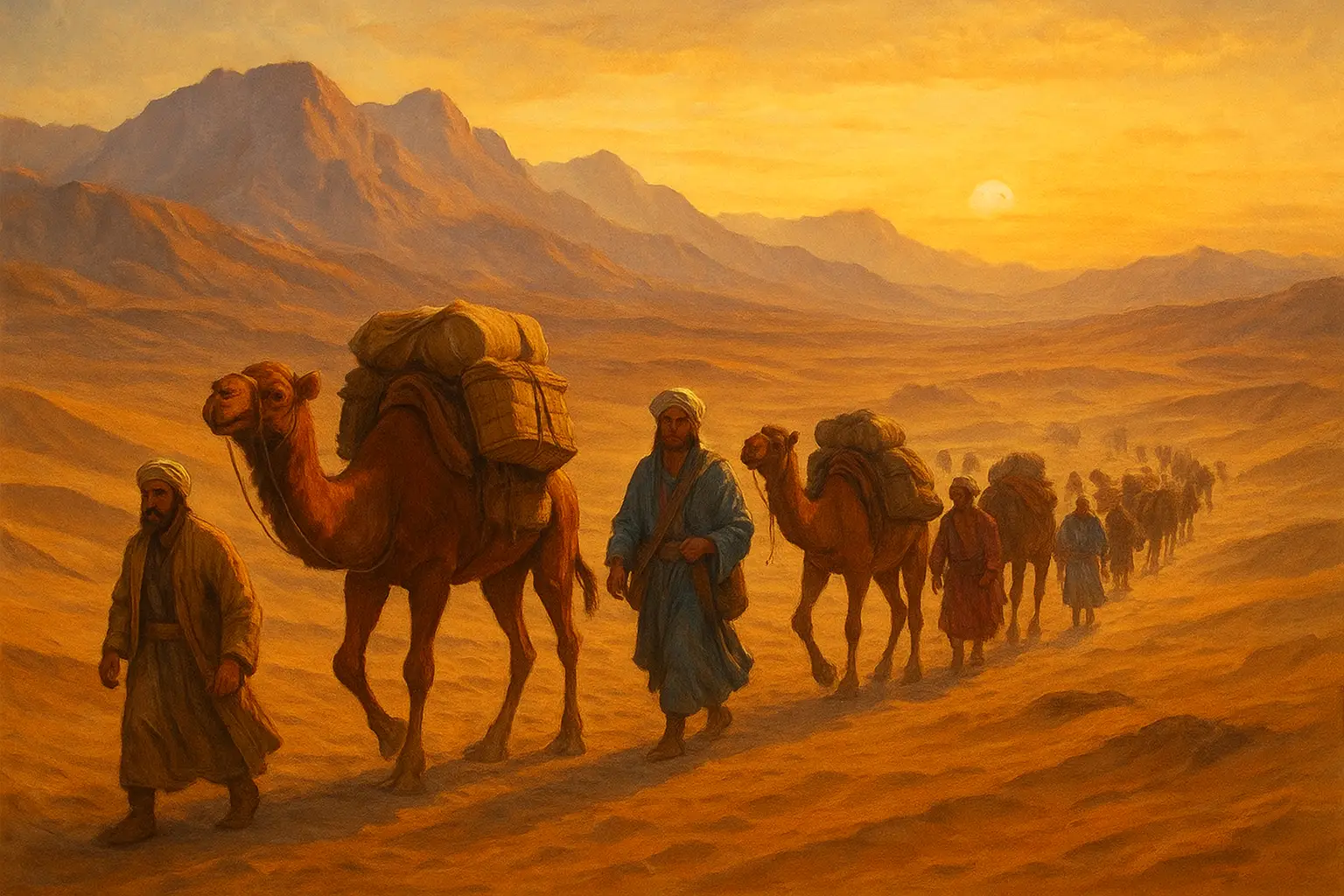
Trading along the Silk Road was perilous. Caravans faced extreme heat in deserts like the Taklamakan (“the desert of no return”) and the freezing passes of the Pamir Mountains. Banditry, political instability, and disease added to the dangers.
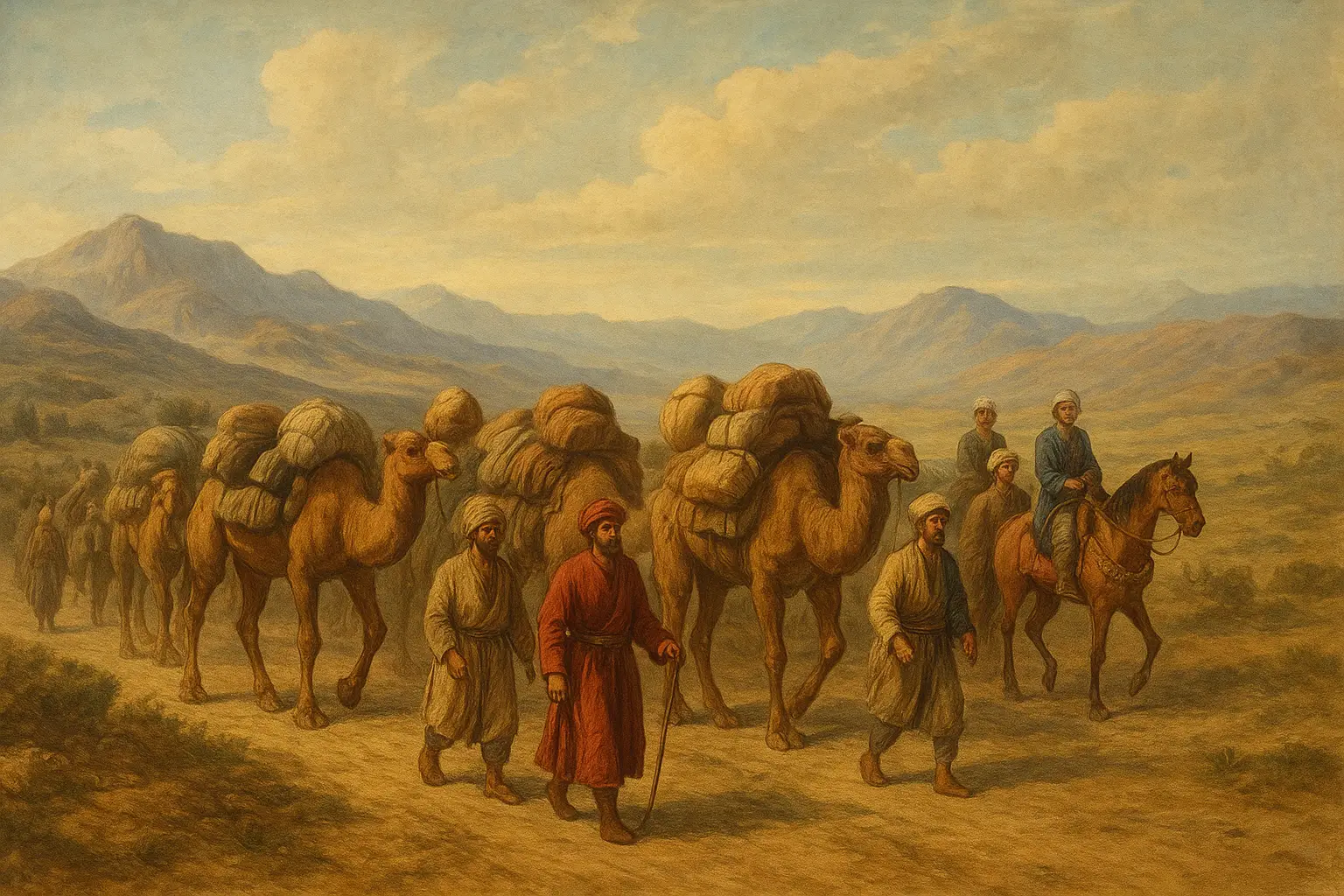
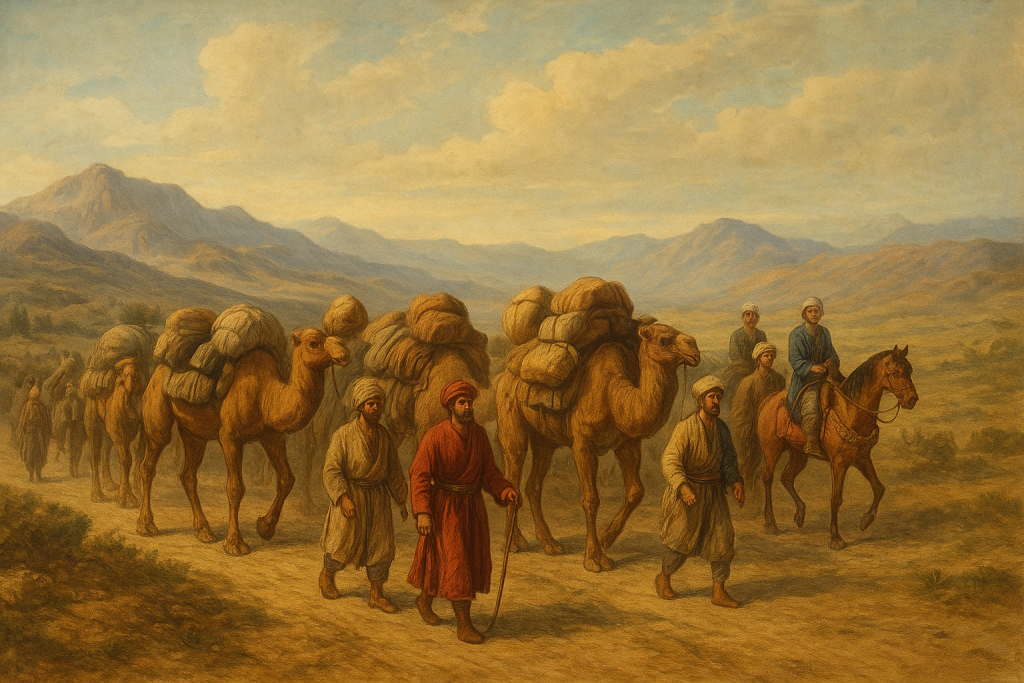
To mitigate risk, merchants often traveled in large, armed caravans, and cities along the route established caravanserais — fortified inns offering shelter and safety. These rest stops, spaced roughly a day’s journey apart, became centers of exchange in their own right, fostering cultural mingling among travelers of diverse backgrounds.
The Maritime Silk Road
While the overland routes are most famous, there was also a Maritime Silk Road, connecting Chinese ports like Guangzhou and Quanzhou with Southeast Asia, India, Arabia, and East Africa.
By the Tang (618–907 CE) and Song (960–1279 CE) dynasties, maritime trade had become increasingly important. Chinese ceramics and silk flowed out of Asia by sea, while traders brought back spices, ivory, and pearls.
This network extended all the way to Zanzibar on the East African coast, illustrating how far the Silk Road’s influence reached.
The maritime routes would later pave the way for the Age of Exploration, linking directly to the voyages of European navigators like Vasco da Gama and Christopher Columbus centuries later.
The Decline of the Silk Road
By the late 15th century, the overland Silk Road began to decline. Several factors contributed to its downfall:
- The Mongol Empire’s collapse disrupted the unified political stability that had once protected the routes.
- The rise of Ottoman control over the eastern Mediterranean limited access for European merchants.
- Most importantly, sea routes became faster, safer, and more profitable.
When Portuguese and Spanish explorers opened new maritime passages to Asia, the ancient Silk Road lost its dominance — but not its legacy.
The Silk Road and the Mongol Empire
A crucial revival came during the 13th and 14th centuries, under the rule of the Mongol Empire. Genghis Khan and his successors, including Kublai Khan, united a vast territory stretching from China to Europe, creating an era of relative peace known as the Pax Mongolica.
The Mongols promoted trade, protected caravans, and established efficient communication systems using relay stations and passports known as paiza.
This stability allowed merchants, scholars, and travelers — including the famous Venetian Marco Polo — to journey across Asia. Polo’s account of his travels to the Yuan court in China sparked Europe’s imagination and helped inspire future exploration.
Enduring Legacy and Modern Revival
The Silk Road may have faded centuries ago, but its influence endures. It shaped the development of globalization, economic interdependence, and cultural fusion long before those terms existed.
Today, the concept of the Silk Road has been revived through initiatives like China’s Belt and Road Initiative (BRI) — a modern infrastructure and trade project linking Asia, Europe, and Africa. Though driven by 21st-century economics, it draws direct inspiration from the ancient routes that once connected civilizations through mutual exchange.
In 2014, UNESCO recognized the ancient Silk Roads as a World Heritage Site, honoring their historical significance and the diverse cultures they linked.
Conclusion
The Silk Road stands as one of humanity’s greatest achievements — a testament to our enduring drive to connect, trade, and share knowledge across borders. It linked empires, religions, and ideas, shaping the course of world history in ways that still resonate today.
Beyond its commerce, the Silk Road symbolizes cooperation over isolation, curiosity over fear, and exchange over conflict.
From the caravans that once crossed the deserts of Central Asia to the modern freight trains linking China and Europe, the spirit of the Silk Road lives on — reminding us that every great civilization has thrived not through walls, but through bridges of trade and understanding.