Introduction
In the arid plains of southern Peru, etched into the surface of the desert, lies one of humanity’s most extraordinary and perplexing creations — the Nazca Lines. Spanning hundreds of square kilometers, these enormous geoglyphs — geometric shapes, straight lines, and intricate animal figures — have baffled archaeologists and researchers for decades.
Created by the Nazca civilization over 1,500 years ago, the lines are so vast that many of them can only be fully appreciated from the sky. Yet, they were made centuries before human flight was even possible. How did the Nazca people design such massive and precise figures? What purpose did they serve? And how have they survived for so long in the desert sands?
The mystery of the Nazca Lines remains one of the most enduring puzzles of archaeology — a silent message from an ancient people whose meanings we are still trying to decipher.
Discovery of the Lines
The Nazca Lines were first brought to global attention in 1927 when Peruvian archaeologist Toribio Mejía Xesspe spotted them while hiking through the surrounding foothills. However, it wasn’t until the 1930s, when commercial airplanes began flying over southern Peru, that the full scale of the designs became apparent.
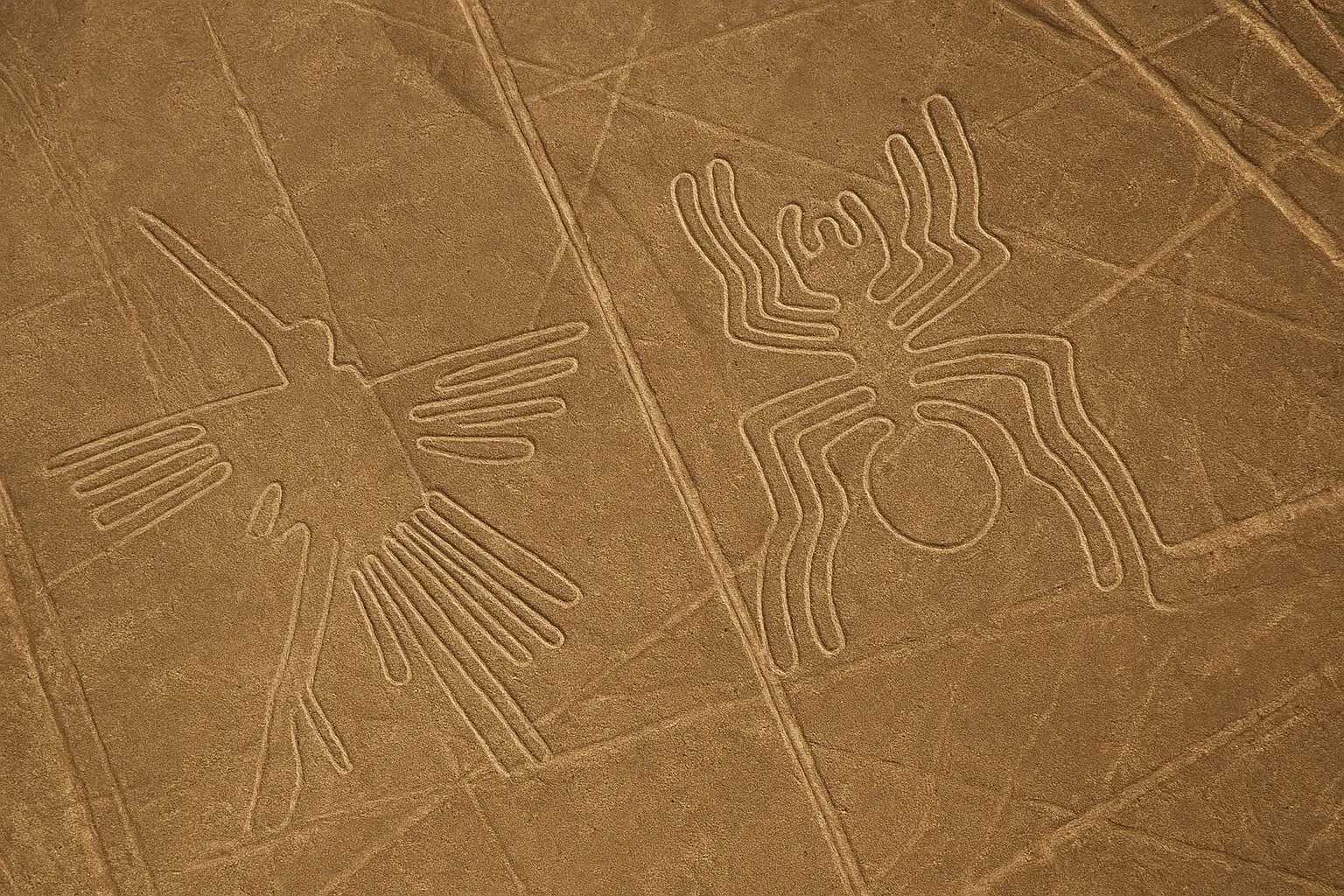
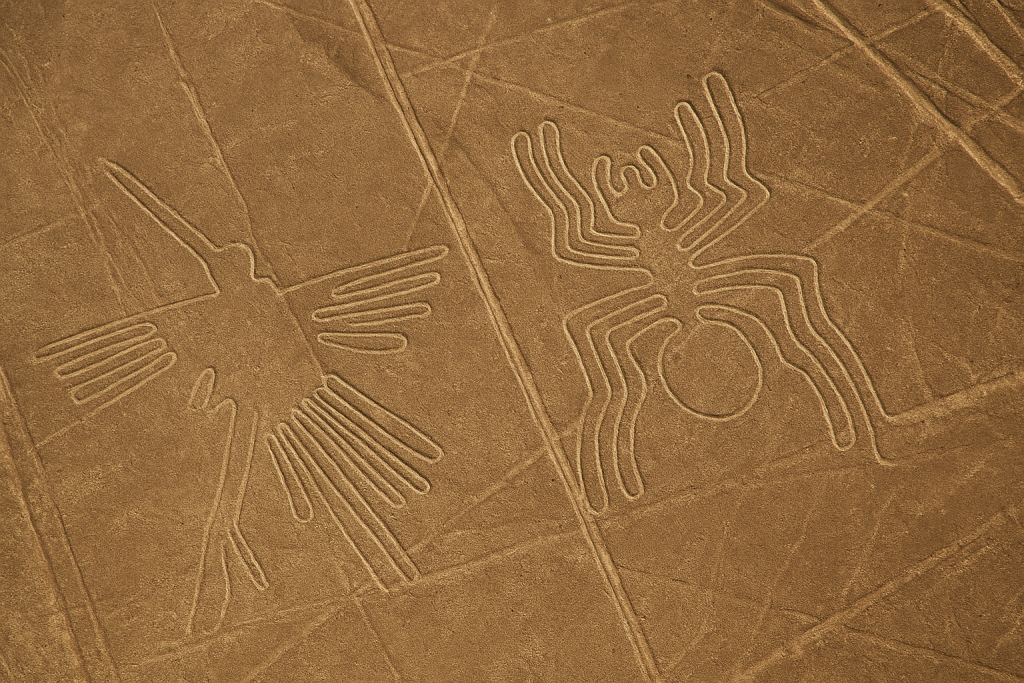
From the air, researchers could see vast patterns — straight lines stretching for miles, as well as enormous depictions of animals, plants, and symbols carved into the earth. Soon, photographs of giant figures of a monkey, hummingbird, spider, whale, and condor captured the world’s imagination.
The largest figures measure over 300 meters (nearly 1,000 feet) across, and the lines themselves are typically about 10–30 centimeters deep. The desert’s dry climate and lack of wind have preserved them remarkably well for centuries.
The Nazca Civilization
To understand the lines, one must first understand the people who created them. The Nazca civilization flourished between 200 BCE and 600 CE along the southern coast of Peru. They were skilled farmers and engineers, known for developing complex irrigation systems that allowed agriculture to thrive in one of the driest regions on Earth.
The Nazca people also excelled in pottery, weaving, and textile production. Their art often depicted animals, mythological beings, and symbols of fertility — themes that also appear in the geoglyphs. However, because they left no written records, much of what we know about their beliefs and practices comes from archaeological inference.
The Nazca were deeply connected to nature and the cosmos. Their religion centered on mountains, water, and celestial bodies, which they believed influenced the fertility of the land. It is within this spiritual framework that the Nazca Lines begin to make sense.
How the Lines Were Made
The technique behind the creation of the Nazca Lines is deceptively simple yet ingenious. The Nazca Desert is covered by a layer of dark reddish-brown pebbles rich in iron oxide. When these stones are removed, the lighter-colored soil underneath becomes visible, creating a stark contrast.
By carefully scraping away the surface stones, the Nazca people drew lines, shapes, and figures on the desert floor. Researchers have replicated this process with simple tools — wooden stakes and cords — showing that such massive designs could be plotted accurately without aerial views.
Some lines run perfectly straight for over 10 miles (16 km), suggesting a sophisticated understanding of geometry and surveying. Archaeologists have also discovered wooden stakes buried at several geoglyph sites, likely used as markers to ensure precision.
Types of Nazca Figures
The Nazca Lines include over 800 straight lines, 300 geometric figures, and more than 70 representations of animals and plants. These can be grouped into three main categories:
- Straight Lines and Geometric Shapes
These include long, narrow lines, trapezoids, spirals, and triangles. Some align with mountain ranges, water sources, or celestial events. - Biomorphic Figures
These depict living beings — such as the hummingbird, monkey, condor, spider, whale, dog, and lizard. The stylized designs often carry symbolic meaning in Nazca art and pottery. - Abstract and Unknown Figures
Some shapes don’t resemble any known animal or symbol. For instance, the so-called “Astronaut,” with its human-like figure and large eyes, has puzzled researchers for decades.
The variety and precision of these figures suggest that the Nazca Lines were not random but had deep cultural or spiritual significance.
Theories About Their Purpose
Over the years, numerous theories have attempted to explain the purpose of the Nazca Lines. Some are grounded in archaeology and anthropology, while others venture into the realm of speculation and myth. Below are the leading interpretations:
1. Astronomical Calendar
German mathematician Maria Reiche, who devoted her life to studying the lines, believed they represented an astronomical calendar. She proposed that certain lines and figures corresponded to the solstices, equinoxes, and movements of celestial bodies like the sun, moon, and stars.
While some alignments do match solar or stellar patterns, further studies suggest that not all lines fit this model, indicating that astronomy alone may not explain their full purpose.
2. Religious or Ritual Significance
The most widely accepted theory today is that the lines had ritual or religious purposes. The Nazca were dependent on scarce rainfall, and many geoglyphs point toward the Andean mountains, where water originates. Researchers believe the lines may have been part of ceremonial processions to invoke water and fertility.
Archaeological evidence shows offerings — including pottery, shells, and animal remains — found near some lines, supporting the idea of ritual activity.
3. Water Cult and Irrigation
Anthropologist Johan Reinhard proposed that the Nazca Lines were related to a “water cult”, emphasizing the importance of water in an arid environment. The trapezoids and lines may have served as ceremonial walkways used during rituals to appeal to deities for rain and agricultural fertility.
4. Pathways for Pilgrimages
Some geoglyphs appear to be connected by networks of walkable lines. Archaeologists suggest these may have served as pilgrimage routes, with participants walking the lines as part of sacred journeys. The act of walking itself could have held spiritual meaning, connecting people to the divine forces of nature.
5. Extraterrestrial Hypothesis
In popular culture, authors like Erich von Däniken (in Chariots of the Gods?) suggested that the Nazca Lines were created as landing strips or messages for ancient aliens. While entertaining, there is no scientific evidence supporting this claim. The patterns can be easily explained by human means and local cultural context.
Preservation and Environmental Challenges
The Nazca Lines have survived for over 1,500 years largely because of the region’s stable climate. The desert receives less than 1 inch (2.5 cm) of rain per year, and the lack of wind prevents erosion.
However, the site is not immune to damage. In recent decades, urban expansion, illegal mining, and tourism have threatened the delicate lines. In 2014, a Greenpeace protest inadvertently damaged a portion of the hummingbird geoglyph, leaving footprints and tire marks that remain visible today.
The Peruvian government, in collaboration with UNESCO (which declared the site a World Heritage Site in 1994), has implemented stricter preservation measures, including surveillance and restricted access to certain areas. Drones and satellite imagery now help monitor and document the geoglyphs without disturbing the fragile desert surface.
Recent Discoveries
New technology continues to shed light on the mystery of the Nazca Lines. Using high-resolution satellite imagery and AI-powered analysis, researchers from Japan’s Yamagata University have discovered over 300 previously unknown geoglyphs since 2018.
These newly identified figures — including cats, birds, and humanoid shapes — suggest that the Nazca tradition of creating geoglyphs may have evolved over centuries, with different generations adding new designs.
Moreover, studies of surrounding settlements and ceremonial centers, such as Cahuachi, indicate that the lines were part of a broader cultural and religious landscape, deeply integrated into the Nazca worldview.
Cultural and Symbolic Legacy
The Nazca Lines are more than just archaeological wonders; they are enduring symbols of human creativity and spirituality. Their makers transformed an unforgiving landscape into a sacred canvas, expressing ideas about the cosmos, fertility, and the relationship between humanity and nature.
Modern Peruvians regard the lines as a profound link to their ancestral heritage. The geoglyphs continue to attract pilgrims, scholars, and tourists from around the world, each drawn by the same sense of wonder that first captivated explorers nearly a century ago.
They remind us that ancient peoples, though separated from us by time, shared our curiosity about existence and our desire to communicate with forces greater than ourselves — whether gods, stars, or nature itself.
Conclusion
The Nazca Lines of Peru stand as one of the greatest enigmas of the ancient world — a masterpiece of design, mathematics, and spiritual symbolism. Despite decades of study, their full meaning remains just beyond our reach, a mystery carved into the earth by a civilization whose voice has faded into time.
Yet, perhaps that mystery is what gives them their power. The lines compel us to look beyond our modern assumptions and recognize the genius of ancient people who saw their world not merely as landscape but as sacred ground.
In the vast silence of the Nazca Desert, these lines continue to whisper across the centuries — not just as relics of a lost civilization, but as messages from humanity’s shared past, written on the very skin of the earth.