Introduction
Long before the rise of Greece, Rome, or even ancient Egypt’s great pyramids, a vast and sophisticated civilization flourished along the river valleys of modern-day Pakistan and northwest India. Known as the Indus Valley Civilization (or Harappan Civilization), it emerged around 3300 BCE and thrived for nearly a thousand years.
At its height, it boasted advanced city planning, standardized architecture, efficient drainage systems, and a surprisingly egalitarian society — all long before most of the world had even developed writing systems. Yet, by around 1900 BCE, this remarkable civilization mysteriously declined and eventually vanished, leaving behind only ruins and undeciphered symbols.
The Indus Valley Civilization remains one of humanity’s greatest archaeological puzzles — a testament to lost brilliance and a silent reminder of how even the most advanced societies can fade into obscurity.
The Discovery of the Indus Civilization
For centuries, the existence of this ancient civilization was forgotten. While Mesopotamia and Egypt were well-known through written records, the Indus world lay buried under layers of earth and time.
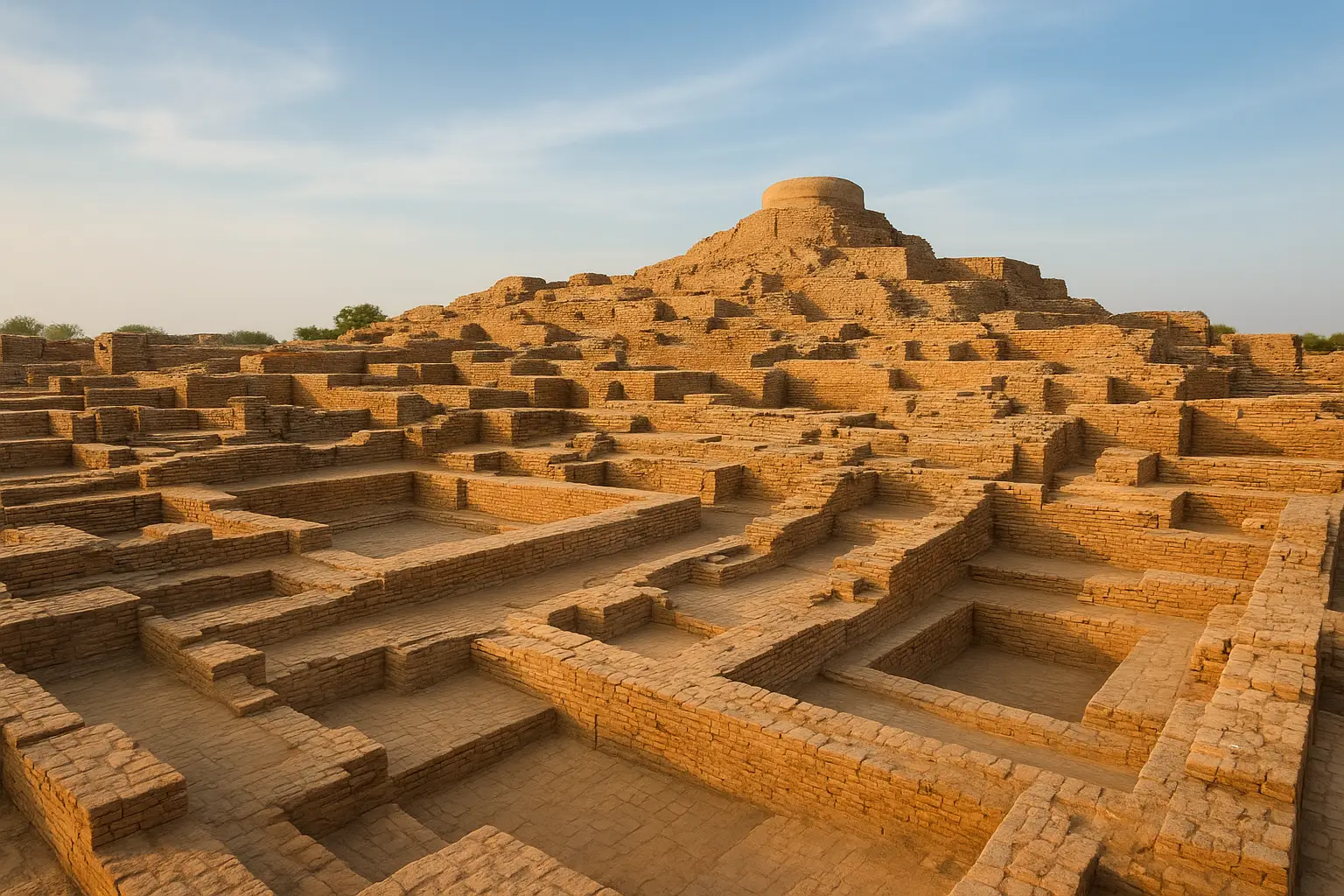
In 1921, archaeologists excavating near Harappa (in modern Pakistan’s Punjab region) discovered the remains of a large, planned city. Soon after, another massive site was unearthed at Mohenjo-Daro, near the Indus River in Sindh. Together, these finds revealed an entire urban civilization that rivaled those of Sumer and Egypt.
The discovery shocked historians. The Indus people had developed a complex, literate, and urban society — yet their name, language, and achievements had vanished from human memory for over 3,000 years.
Urban Planning and Architecture
The cities of the Indus Valley stand as models of early urban engineering. Unlike the chaotic layouts of other early civilizations, Harappan cities were meticulously planned using grid systems — streets laid out in perfect right angles, dividing neighborhoods into well-organized blocks.
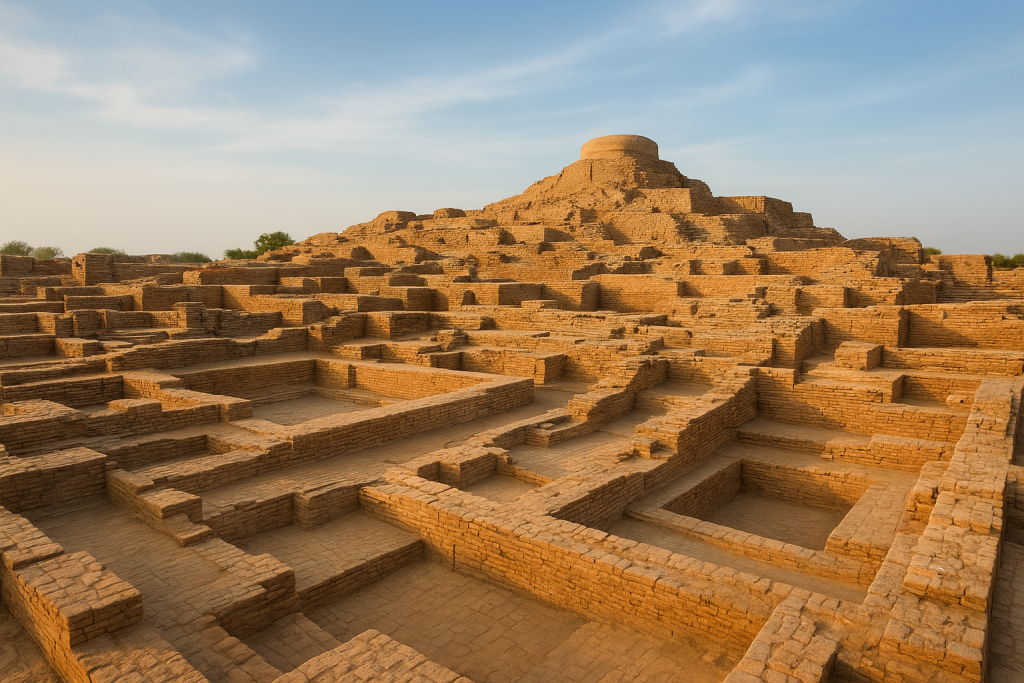
At Mohenjo-Daro, archaeologists uncovered wide avenues, multi-story brick houses, public wells, and even a sophisticated sewage and drainage system — something that wouldn’t appear again in many parts of the world until the 19th century.
Each home had access to running water and indoor bathrooms connected to covered drains — an astonishing sign of civic awareness and public hygiene. The bricks used for construction were standardized in size, suggesting centralized control or regulation — perhaps the earliest form of urban zoning.
The most iconic structure of Mohenjo-Daro is the Great Bath, a massive public pool lined with baked bricks and watertight bitumen. It’s believed to have been used for ritual bathing — an early sign of the religious and cultural importance of purification.
Trade, Economy, and Technology
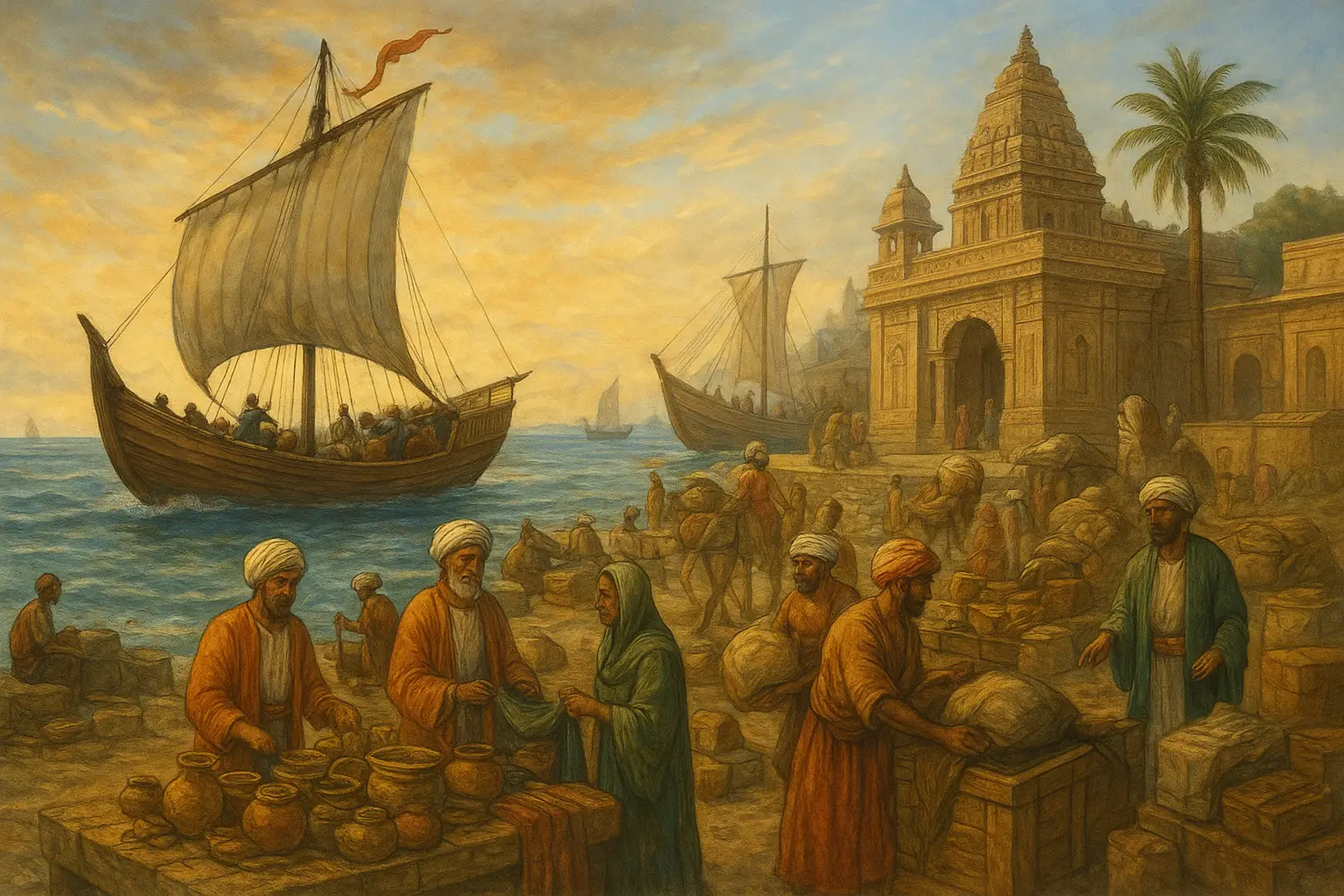
The Indus people were not just builders; they were traders and innovators. Excavations have revealed a complex economy based on agriculture, craftsmanship, and long-distance trade.
Their fertile lands produced wheat, barley, and cotton — the latter making them among the first people in the world to weave cotton textiles. Artifacts such as seals, pottery, jewelry, and tools show exceptional skill in metallurgy and craftsmanship.
Indus merchants traded goods like beads, ivory, and metalwork with Mesopotamia, Persia, and Central Asia. Archaeologists have found Indus seals in ancient Mesopotamian cities like Ur and Lagash, suggesting direct contact between the two great civilizations.
The discovery of standardized weights and measures — cubes and cylinders made of chert — shows the Harappans used a decimal system and a highly organized approach to commerce.
Their technology also included copper tools, bronze figurines, and possibly early forms of irrigation systems, all showing an impressive command of engineering.
Society and Daily Life
Unlike Egypt or Mesopotamia, the Indus Valley shows little evidence of powerful kings or vast armies. There are no grand palaces, temples, or royal tombs. Instead, all cities seem to follow the same layout and architectural standards, suggesting a more egalitarian or decentralized form of governance.
This has led historians to speculate that the Indus Civilization might have been managed by a council of elders or local administrators rather than a single ruler. The uniformity across hundreds of sites — from Harappa to Dholavira — points to strong central coordination, possibly driven by shared trade laws or cultural beliefs rather than force.
Artifacts also reveal a peaceful society — weapons are rare, and defensive walls seem designed more for flood control than warfare.
In daily life, people likely lived in extended families, worked as artisans, merchants, or farmers, and participated in ritual or communal activities. Small clay figurines, toys, and dice show that leisure and spirituality were important aspects of Harappan culture.
Religion and Symbolism
The spiritual life of the Indus people remains shrouded in mystery because their writing system has not yet been deciphered. However, archaeologists have found thousands of seals depicting animals, divine figures, and sacred symbols.
One famous seal — known as the Pashupati Seal — shows a horned figure seated in a yogic posture surrounded by animals. Many scholars link this image to early forms of Hindu deities like Shiva, suggesting that some Harappan beliefs may have survived into later Indian religions.
The emphasis on fertility figurines and sacred animals like the bull also indicates a nature-based, fertility-oriented belief system — perhaps centered around Mother Earth and animal worship.
The Great Bath of Mohenjo-Daro further suggests rituals of purification and water symbolism, themes that persist in South Asian spirituality to this day.
The Enigma of the Indus Script
The biggest mystery surrounding the Indus Civilization is its undeciphered script. Found on seals, pottery, and tools, the script consists of 400–600 unique symbols arranged in short sequences.
Despite decades of study, linguists and archaeologists have been unable to interpret it. Some believe it represents a full written language — possibly related to early Dravidian tongues — while others think it might be a set of religious or administrative symbols rather than a true script.
Without a bilingual reference (like the Rosetta Stone for Egyptian hieroglyphs), the meaning of these inscriptions remains elusive. Until it’s cracked, our understanding of their beliefs, governance, and social structure will remain incomplete — a true case of lost knowledge.
The Mysterious Decline
Around 1900 BCE, the Indus Civilization began to decline. Cities were gradually abandoned, trade networks collapsed, and population centers shifted eastward.
Several theories attempt to explain this fall:
- Climate Change: Geological and climate studies suggest that the Saraswati and Ghaggar-Hakra rivers, crucial to Indus agriculture, began to dry up due to changing monsoon patterns. This would have caused drought and famine.
- Floods and Natural Disasters: Some cities show signs of repeated flooding, possibly due to river shifts or earthquakes.
- Trade Disruption: As Mesopotamia declined and trade routes changed, economic collapse may have followed.
- Gradual Cultural Transformation: Rather than being destroyed suddenly, the Indus people may have migrated eastward, merging into early Vedic cultures of northern India.
There’s little evidence of invasion or warfare, suggesting the fall was slow and environmental rather than violent.
Legacy and Influence
Though the Indus Civilization vanished, its influence lived on. The emphasis on urban cleanliness, water management, and standardized planning echoes through later South Asian cultures.
Some scholars believe that early Hindu traditions, urban designs, and agricultural practices in the Indian subcontinent were inherited from Indus roots. The continuity of sacred symbols, like the swastika (originally a sign of good fortune), and the practice of ritual bathing may also trace back to Harappan times.
Modern cities like Harappa and Mohenjo-Daro, now UNESCO World Heritage Sites, continue to yield new archaeological finds — terracotta toys, jewelry, tools, and evidence of early writing — offering fresh insights into how advanced these ancient people truly were.
Conclusion
The Indus Valley Civilization stands as one of the most advanced, peaceful, and enigmatic societies of the ancient world. Its people mastered urban planning, sanitation, trade, and craftsmanship thousands of years before similar advancements reached the West.
Yet, their language, their rulers, and their worldview remain silent — locked within undeciphered symbols and crumbling ruins.
In a world obsessed with technological progress, the story of the Indus Valley reminds us that true civilization is measured not only by power or conquest but by order, equality, and the pursuit of harmony with nature.
Their achievements, buried beneath the sands of time, challenge our assumptions about what it means to be civilized — and serve as a timeless tribute to humanity’s enduring quest for knowledge and connection.