Introduction
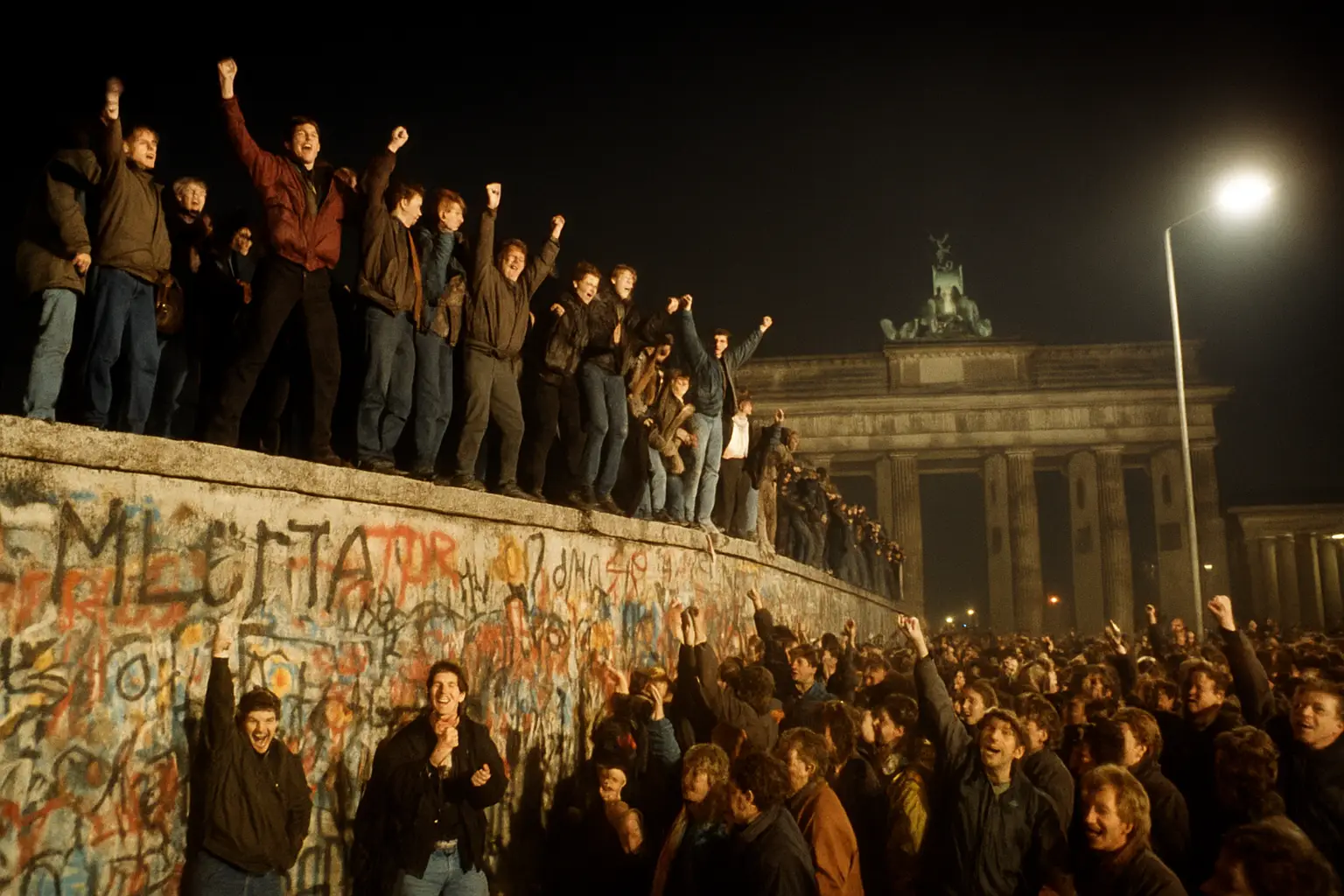
On the evening of November 9, 1989, a quiet revolution began in the heart of Europe. Thousands of East Berliners, driven by hope and disbelief, surged toward the concrete barrier that had divided their city for nearly three decades. Guards, overwhelmed and uncertain, opened the gates — and the people poured through.
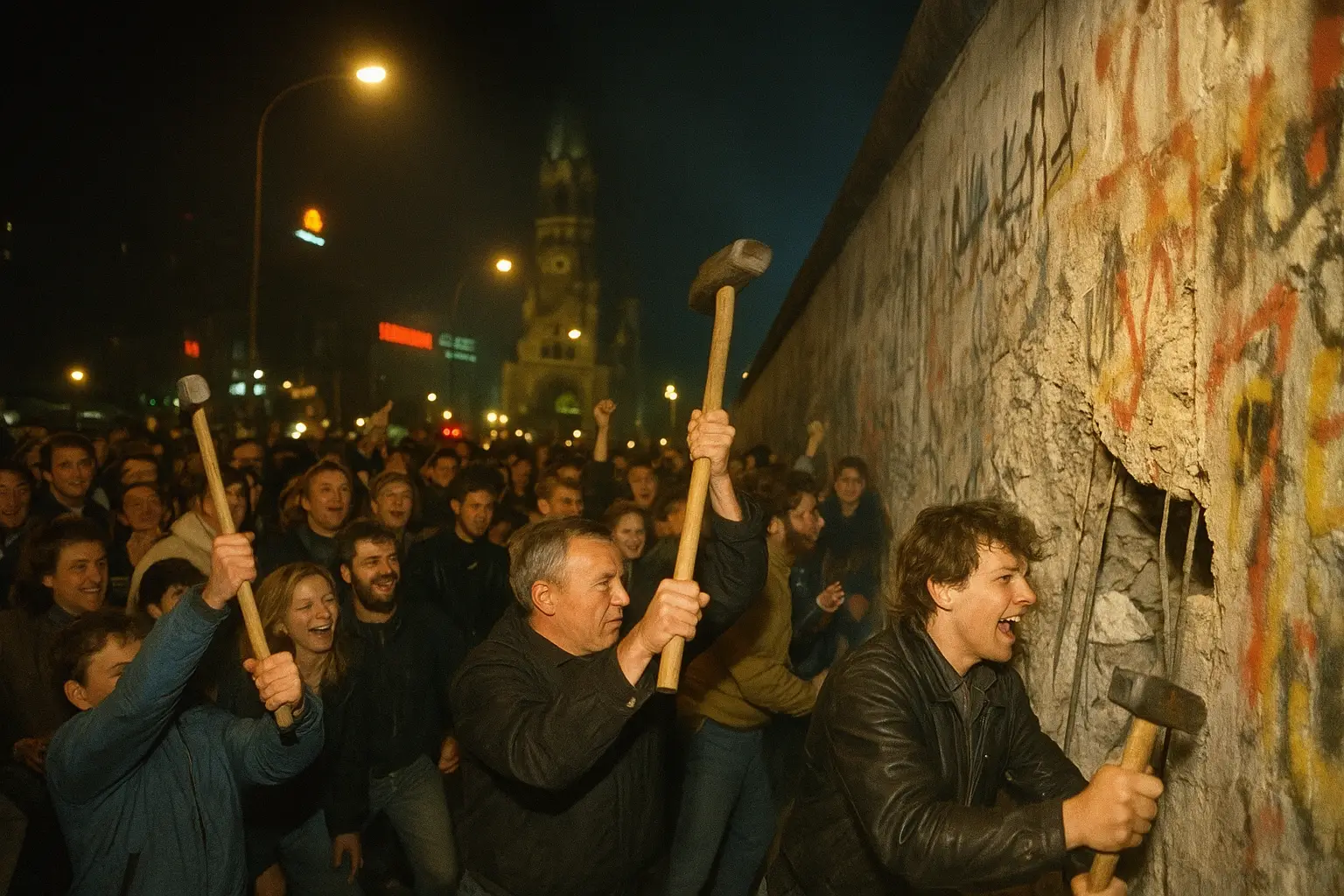
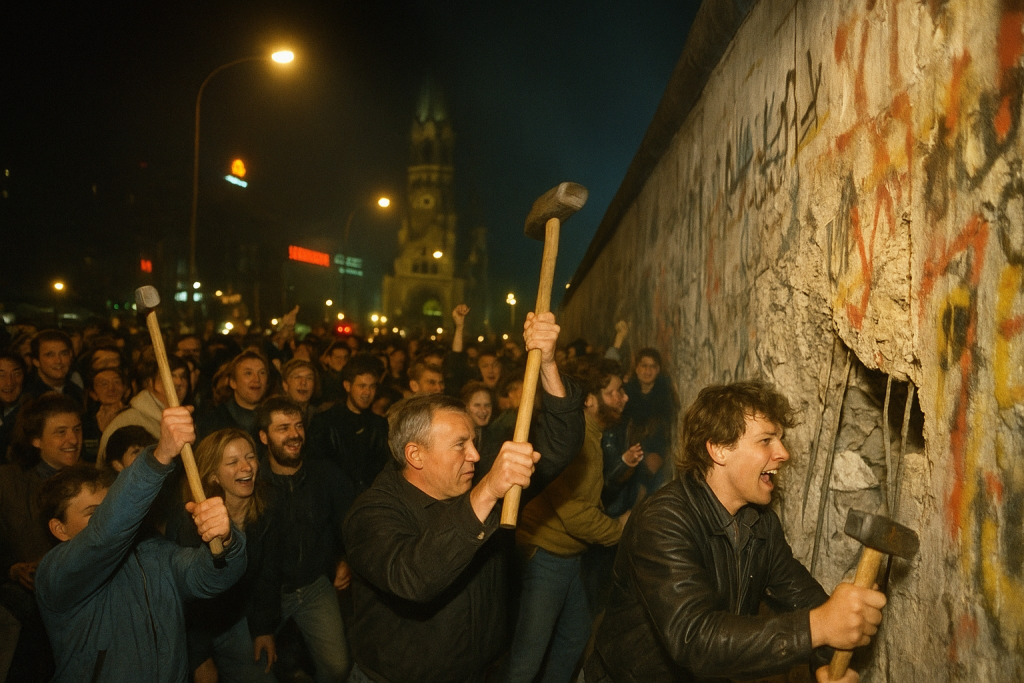
That night, the Berlin Wall fell, not with explosions or bloodshed, but with the roar of freedom and the pounding of hammers against stone.
It was one of the most defining moments of the 20th century — the symbolic end of the Cold War, the beginning of a united Germany, and a profound turning point for global politics.
Yet, the fall of the Berlin Wall was not a spontaneous miracle; it was the result of years of social unrest, political missteps, and relentless courage from ordinary citizens determined to reclaim their freedom.
The Birth of the Wall: A City Divided
After World War II, Germany was divided among the victorious Allied powers:
- The United States,
- The United Kingdom,
- France, and
- The Soviet Union.
The capital, Berlin, though entirely within the Soviet-controlled zone of East Germany, was also split into East and West sectors.
By 1949, two separate nations emerged:
- The Federal Republic of Germany (FRG) — West Germany, a capitalist democracy backed by the West.
- The German Democratic Republic (GDR) — East Germany, a communist state under Soviet influence.
While West Germany thrived economically during the postwar boom, East Germany struggled under a rigid, state-controlled system.
The result was an exodus — between 1949 and 1961, over 2.7 million East Germans fled to the West, often through Berlin, where the border was still open. The brain drain was catastrophic for the East: doctors, engineers, and intellectuals left en masse, weakening the state.
To stem the flow, on August 13, 1961, East German leader Walter Ulbricht, with Soviet approval, erected the Berlin Wall overnight.
A Wall of Concrete and Fear
At first, it was just barbed wire. Within days, concrete blocks and guard towers appeared. Families were separated, streets were cut in half, and train lines were severed.
The Wall soon became a 13-foot-high barrier, stretching over 150 kilometers (93 miles) around West Berlin, fortified with:
- Concrete segments,
- Watchtowers,
- Minefields,
- Guard dogs, and
- The infamous “death strip” — a clear zone where guards had orders to shoot to kill anyone attempting escape.
Between 1961 and 1989, an estimated 140 to 200 people were killed trying to cross. Some were shot; others drowned or fell while attempting to scale the barrier.
Yet despite the risks, escape attempts never ceased — tunnels were dug, balloons were built, cars were modified, and daring individuals even flew homemade aircraft across the border.
The Wall stood not just as a physical division but as a symbol of oppression, the most visible scar of the Cold War that divided East and West, communism and capitalism, dictatorship and democracy.
Life Behind the Wall
For East Germans, life under the socialist regime was defined by surveillance and scarcity. The Stasi, East Germany’s secret police, maintained one of the most extensive spy networks in history. By the 1980s, it was estimated that one in every 60 citizens acted as an informant.
Travel to the West was forbidden for ordinary citizens, and even within East Germany, movement was restricted. Access to Western goods, media, and culture was tightly controlled.
Still, many East Germans believed in socialism’s ideals. They worked, studied, and built families under the system. But as Western television signals seeped through and tales of freedom in the West spread, discontent grew.
By the 1980s, the GDR faced mounting economic decline, political stagnation, and public frustration. The people began to demand change.
The Winds of Change: Reform in the East Bloc
The 1980s saw sweeping transformations across the Soviet sphere, driven largely by Mikhail Gorbachev, who came to power in 1985.
Gorbachev introduced two groundbreaking policies:
- Perestroika (Restructuring) – economic reforms aimed at revitalizing the Soviet system.
- Glasnost (Openness) – encouraging transparency, free speech, and limited political debate.
These reforms sent shockwaves throughout Eastern Europe. For the first time, Soviet satellite states could question Moscow’s authority without immediate military retaliation.
Across the continent, communist governments began to crumble under the weight of popular protests:
- In Poland, the Solidarity movement led by Lech Wałęsa gained power.
- In Hungary, the border with Austria was quietly opened in May 1989.
- In Czechoslovakia, the Velvet Revolution began brewing.
East Germany was not immune. The winds of reform were blowing, and its citizens wanted the same freedoms.
The Protests in East Germany
By 1989, mass demonstrations had become common throughout East Germany.
In Leipzig, thousands gathered every Monday for peaceful marches calling for “Wir sind das Volk!” (“We are the people!”). These protests grew rapidly — from hundreds to hundreds of thousands.
The East German government, led by Erich Honecker, refused to reform and instead resorted to repression. But even the Stasi could not suppress a movement so large and widespread.
In October 1989, Honecker was forced to resign and was replaced by Egon Krenz, who promised change — but it was too late. The regime’s credibility had collapsed.
The East German people had lost their fear.
November 9, 1989: The Night of the Fall
The final unraveling of the Wall began not with a grand political plan, but with a bureaucratic blunder.
On the evening of November 9, East German official Günter Schabowski held a press conference. Reading from hastily written notes, he mistakenly announced that East Germans could now travel freely to the West — effective immediately.
In reality, the law was supposed to take effect the next day after proper processing, but Schabowski misunderstood and told reporters it was “ab sofort” (from now on).
Within hours, news spread across East Berlin. Thousands of citizens, believing the border was open, rushed to the Wall.
At the Bornholmer Straße crossing, border guards, overwhelmed and without clear orders, decided to open the gates rather than use force.
At 10:45 PM, the first crowds crossed into West Berlin. They were greeted by cheers, champagne, and tears. People climbed onto the Wall, danced, and began to chip away at it with hammers — an act that would echo through history.
That night, the Berlin Wall fell — not by decree or war, but by the will of ordinary people.
The Aftermath: Germany Reunited
The fall of the Wall set off a chain reaction that would reshape Europe.
Within days, the border between East and West Germany was effectively gone. Families long separated were reunited. Berlin — once divided by barbed wire and ideology — became a city of celebration.
By October 3, 1990, less than a year later, Germany was officially reunified. The Cold War’s most visible boundary had vanished, and a new era of European unity began.
But reunification was not without challenges. The East faced economic collapse, high unemployment, and the difficult process of integrating into a capitalist system. Billions of marks were invested in rebuilding, yet social and psychological divisions — the so-called “Mauer im Kopf” (“Wall in the mind”) — persisted for decades.
Still, the symbolism of reunification outweighed its difficulties. A divided nation had healed, and Europe began moving toward the democratic, cooperative continent it is today.
Global Impact: The End of the Cold War
The fall of the Berlin Wall marked the beginning of the end of the Cold War.
In the months that followed:
- Communist governments in Czechoslovakia, Bulgaria, and Romania fell.
- The Soviet Union itself began to dissolve, officially disbanding in 1991.
- The United States and Western Europe emerged as dominant global powers.
The ideological divide that had shaped world politics for nearly half a century was over.
The fall of the Wall became a universal symbol of freedom, hope, and the triumph of human spirit over authoritarianism. U.S. President Ronald Reagan’s 1987 challenge — “Mr. Gorbachev, tear down this wall!” — had been fulfilled not by leaders, but by ordinary citizens demanding change.
Legacy and Lessons
More than three decades later, the fall of the Berlin Wall remains one of history’s most powerful symbols of liberation.
1. The Power of the People
It showed that grassroots movements, when united and persistent, can overthrow even the most entrenched regimes without violence.
2. The Fragility of Division
The Wall was built to protect an ideology — but it only isolated and imprisoned. Its fall reminds us that walls, both physical and ideological, are temporary obstacles to human progress.
3. The Importance of Truth and Communication
A single mistake by a government spokesperson triggered a revolution. Information — even when imperfect — became more powerful than repression.
4. Hope Beyond Conflict
The Berlin Wall’s fall is proof that reconciliation and unity are possible, even after decades of hostility. It remains a blueprint for peaceful transformation in divided societies.
Conclusion
The night the Berlin Wall fell, history shifted on its axis. In a single, spontaneous act of collective courage, the people of East and West Berlin ended an era of division that had defined the modern world.
What began as an accident became a global awakening — a moment when the ideals of freedom, unity, and peace triumphed over fear and oppression.
Today, fragments of the Wall stand in museums and memorials worldwide — not as symbols of separation, but as reminders of what humanity can achieve when it refuses to be divided.
The fall of the Berlin Wall was more than the collapse of a structure. It was the rebirth of hope — the moment when the coldest barrier of the Cold War crumbled under the warmth of human spirit.