Introduction
Ancient civilizations represent the foundation of human progress. Long before modern nations and advanced technologies, early societies across the world built complex cities, developed writing systems, established organized governments, and created cultural traditions that still shape our lives today. Understanding ancient history, early human societies, and the rise of civilizations helps us trace the origins of technology, law, art, trade, religion, and science. From Mesopotamia and Ancient Egypt to the Indus Valley, China, Mesoamerica, and the classical civilizations of Greece and Rome, humanity’s earliest cultures laid the groundwork for everything we know today.
This article explores what ancient civilization is, how the earliest societies developed, what major achievements they contributed, and why their legacy remains essential to modern civilization. All information is based on well-recognized archaeological findings, historical research, and widely accepted academic sources.
About Ancient Civilization
An ancient civilization refers to a large, organized society that emerged during early human history, typically characterized by urban development, centralized government, agriculture, trade networks, social structure, and writing systems. Historians generally date the rise of civilizations to around 3000 BCE, when humans began forming cities and complex institutions.
The first civilizations developed independently in a few fertile regions of the world, often near major rivers. This gave them access to water, fertile soil, and trade routes, allowing population growth and technological innovation. These key early centers include:
- Mesopotamia (Tigris–Euphrates Rivers)
- Ancient Egypt (Nile River)
- Indus Valley Civilization (Indus River)
- Ancient China (Yellow River)
- Mesoamerican civilizations (Olmec, Maya, Aztec)
- Andean civilizations (Caral, later Inca)
Each civilization developed unique cultural, political, and technological innovations, but they also shared patterns of growth—proof that humans around the world solved similar problems through creativity, adaptation, and cooperation.
Geography and the Birth of Cities
A major factor in the rise of ancient civilizations was geography. River valleys played an essential role for several reasons:
1. Access to Fresh Water
Rivers such as the Nile, Euphrates, Tigris, Indus, and Yellow River provided water for drinking, irrigation, and transportation. Regular flooding deposited nutrient-rich silt, creating fertile farmland that supported larger populations.
2. Agricultural Surplus
Once farming became efficient, societies could produce surplus crops, allowing people to specialize in non-agricultural roles such as metalworkers, priests, merchants, and builders. This division of labor is one of the defining traits of civilization.
3. Trade and Cultural Exchange
Rivers and coastlines facilitated long-distance trade, enabling early societies to exchange goods, technologies, and ideas. Trade networks helped spread writing systems, mathematics, religious beliefs, and political structures.
4. Defense and Organization
As cities grew, so did the need for structured leadership, law enforcement, defense systems, and infrastructure. This led to the formation of governments, bureaucracies, and codified laws, such as Hammurabi’s Code in Mesopotamia.
Major Ancient Civilizations and Their Contributions
Mesopotamia: The Cradle of Civilization
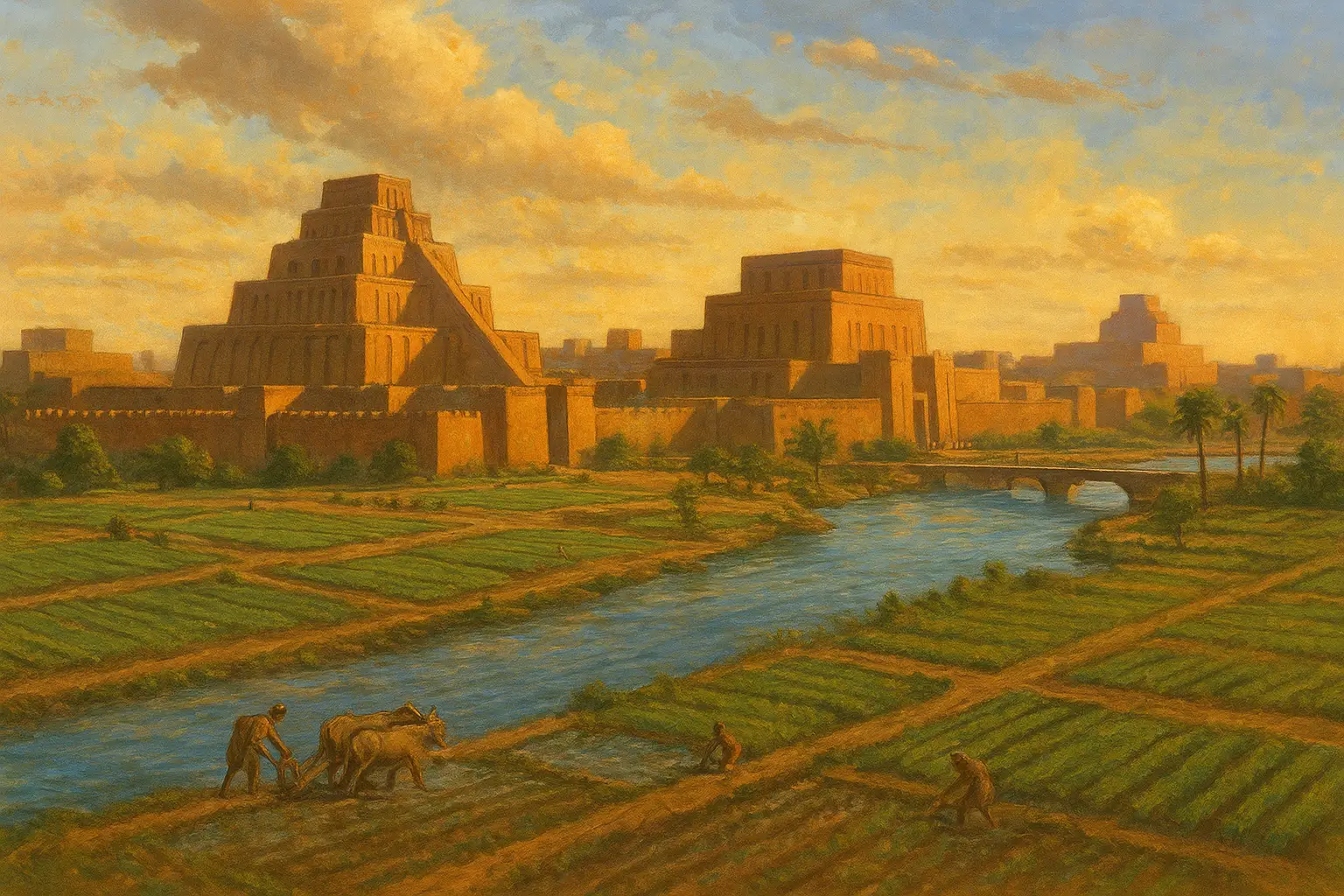
Mesopotamia, located in present-day Iraq, is often called the cradle of civilization. It produced some of the earliest cities like Uruk and Babylon and developed:
- Cuneiform writing, the world’s first script
- The wheel, revolutionizing transportation
- Mathematics based on base-60
- Irrigation systems and large-scale agriculture
- Hammurabi’s Code, one of the earliest legal systems
- Ziggurats, monumental religious structures
Mesopotamian innovations influenced nearby regions and set early standards for administration, science, and technology.
Ancient Egypt: The Civilization of the Nile
Ancient Egypt thrived along the Nile River for more than 3,000 years. It is renowned for:
- Pyramids and monumental architecture
- Hieroglyphic writing
- Advanced medical knowledge
- Solar calendar and early astronomy
- Strong centralized government under pharaohs
- Religious beliefs about the afterlife
The pyramids of Giza remain one of the most iconic architectural achievements in history, showcasing Egypt’s engineering mastery and complex social organization.
Indus Valley Civilization: Urban Planning Pioneers
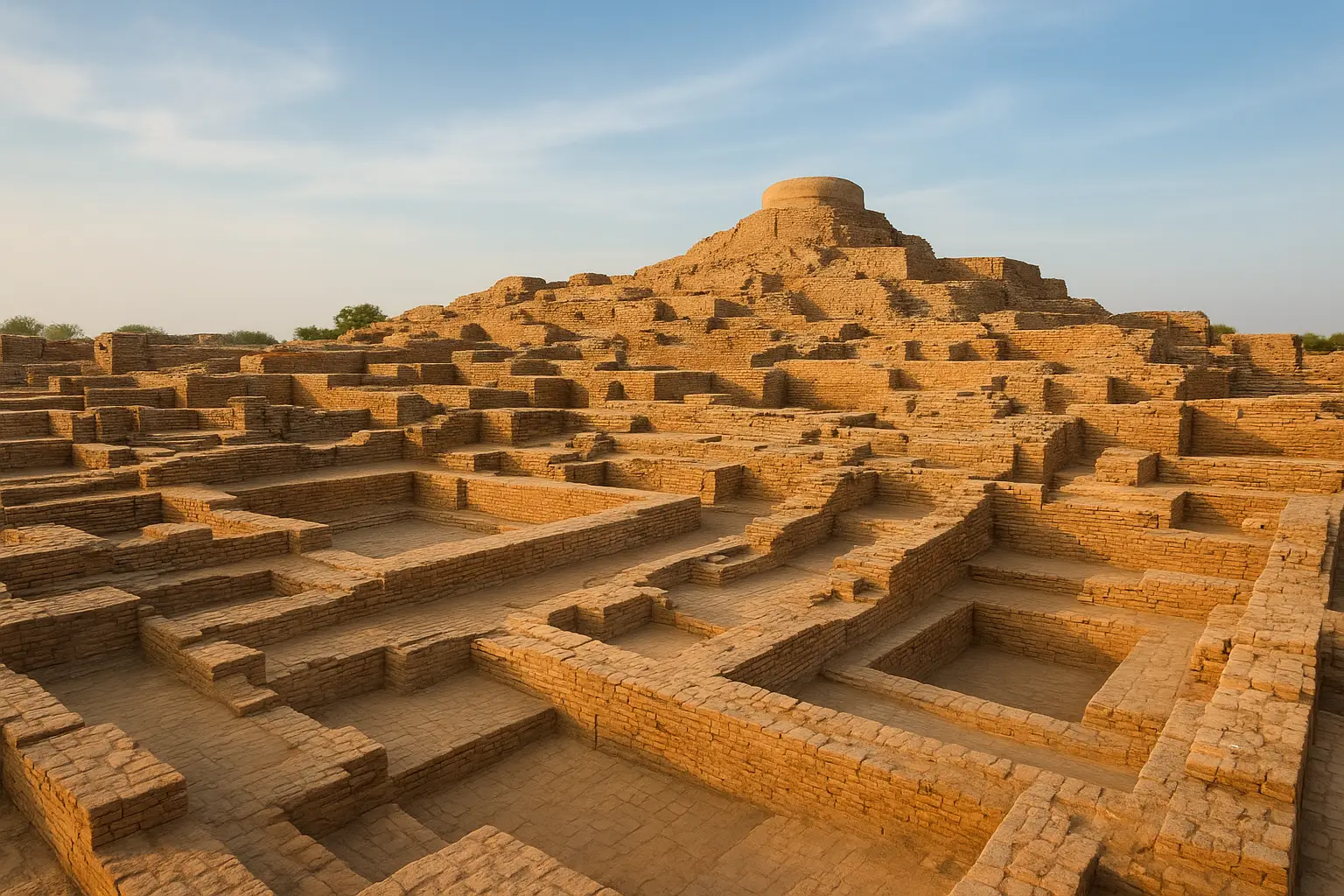
Located in modern Pakistan and northwest India, the Indus Valley Civilization (Harappa and Mohenjo-Daro) is known for:
- Grid-planned cities
- Advanced drainage and sanitation systems
- Standardized weights and measures
- Sophisticated trade networks
- Early examples of urban infrastructure
Unlike other civilizations, the Indus Valley left no confirmed evidence of kings or massive monuments, suggesting a unique, possibly egalitarian form of urban governance.
Ancient China: Dynasties, Inventions, and Philosophy
The Yellow River valley was home to the earliest Chinese civilizations, including the Xia, Shang, and Zhou dynasties. China contributed many groundbreaking innovations:
- Early writing on oracle bones
- Bronze metallurgy
- Silk production
- The Great Wall’s early foundations
- Confucianism and Daoism
- Gunpowder, paper, and later the compass
Chinese civilization influenced East Asian culture for millennia and laid the foundation for one of the world’s longest continuous cultural traditions.
Mesoamerican Civilizations: Astronomy and Architecture
Civilizations such as the Olmec, Maya, Aztec, and Teotihuacan thrived in Central America. Their achievements include:
- Complex calendars
- Pyramid temples
- Hieroglyphic writing systems
- Advanced astronomy
- Agricultural innovation (maize cultivation)
The Maya, for example, developed one of the most sophisticated writing systems in the Americas and built remarkable cities like Tikal and Chichén Itzá.
Greece and Rome: The Foundations of Western Civilization
Ancient Greece and Rome profoundly shaped modern politics, philosophy, law, and culture.
Ancient Greece introduced:
- Democracy
- Western philosophy (Socrates, Plato, Aristotle)
- Olympic Games
- Classical art and architecture
- Scientific inquiry
Ancient Rome contributed:
- Roman law, the basis of many modern legal systems
- Republican government
- Engineering marvels—aqueducts, roads, bridges
- Concrete architecture
- Latin language
These classical civilizations influenced Europe, the Middle East, and eventually the entire world through their cultural, political, and scientific achievements.
Technological and Scientific Achievements
Ancient civilizations introduced many innovations still in use today:
Writing Systems
Writing allowed societies to record history, laws, trade, and religious texts.
Mathematics and Science
Egyptians measured land and developed geometry; Mesopotamians innovated algebra; Greeks built foundations for physics and astronomy; Chinese scholars advanced medicine and engineering.
Architecture
From pyramids to ziggurats, temples, amphitheaters, and palaces, ancient architecture remains a testament to early engineering brilliance.
Agriculture and Irrigation
Techniques such as plowing, crop rotation, and controlled irrigation increased food production and supported growing populations.
Metallurgy
Bronze and later iron tools dramatically transformed warfare, farming, and craftsmanship.
Society, Culture, and Religion
Ancient civilizations were rich with cultural expressions and belief systems.
Religion
Most early societies practiced polytheism, believing in multiple gods responsible for nature, fertility, and fate. Religious structures and rituals played central roles in daily life.
Social Structure
Civilizations developed hierarchies including rulers, priests, merchants, artisans, farmers, and laborers. Social roles were closely tied to economy, religion, and family.
Art and Literature
Artworks, pottery, sculptures, epic literature like the Epic of Gilgamesh, and mythologies preserve insights into ancient worldviews.
Trade Networks and Cultural Exchange
Trade connected early civilizations across continents:
- The Silk Road linked China with Central Asia and the Middle East.
- The Indus Valley traded with Mesopotamia.
- Egyptian merchants engaged with Nubia and the Levant.
- Mediterranean civilizations shared goods, ideas, and technologies.
These exchanges accelerated innovation and helped civilizations grow rapidly.
Decline of Ancient Civilizations
Many civilizations declined due to factors such as:
- Environmental changes or natural disasters
- Invasion and warfare
- Economic collapse
- Political instability
- Disease
- Resource depletion
Yet, even after decline, their cultural legacies continued to influence later societies.
Conclusion
Ancient civilizations mark humanity’s earliest leaps in agriculture, governance, science, art, and culture. They established the foundations for modern cities, legal systems, writing, trade, and technological progress. Studying these early societies—from Mesopotamia and Egypt to Greece, Rome, China, and the Americas—reveals not only how far humanity has come but also how deeply our present is rooted in the past. Their stories remind us that innovation, cooperation, and cultural exchange have always driven human advancement.
Ancient civilizations continue to fascinate modern researchers, students, and history enthusiasts because they show the origins of nearly everything we consider essential today. Understanding them helps us appreciate the development of human society and the timeless achievements that shaped the world.