Introduction
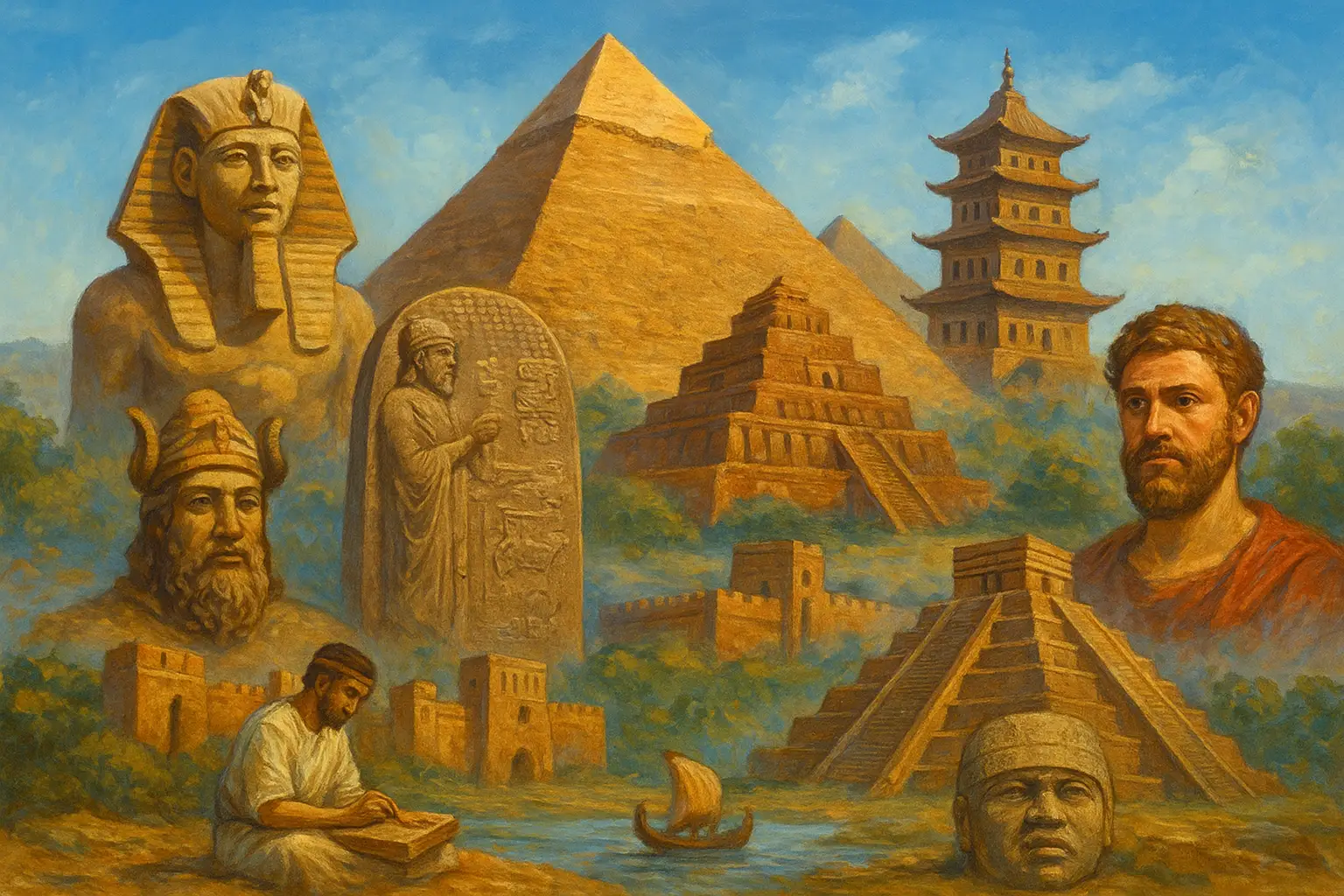
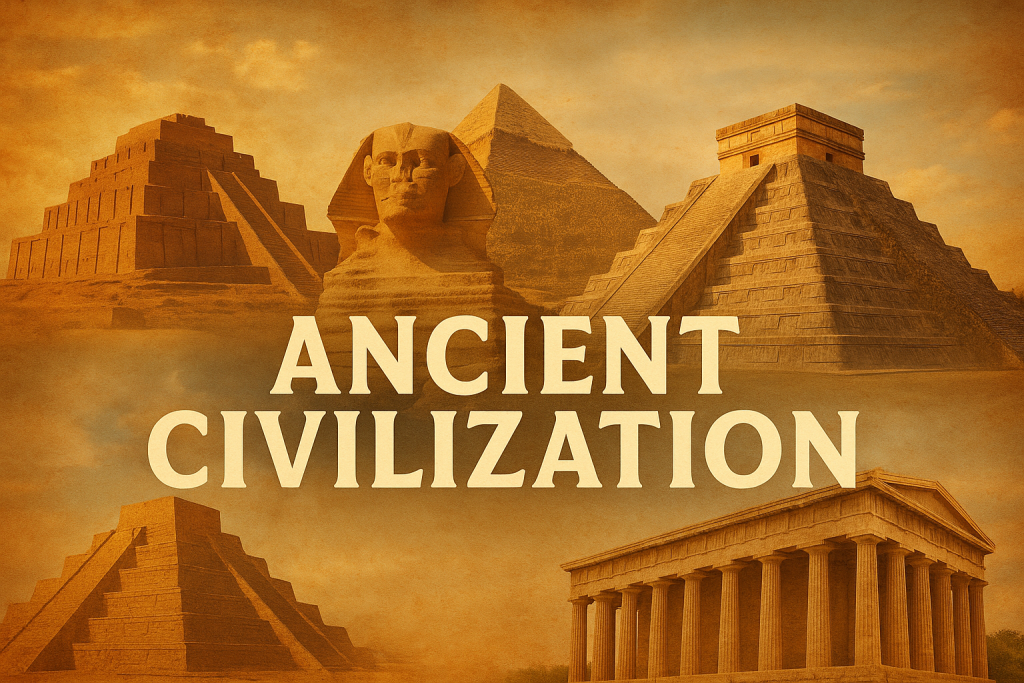
Ancient civilizations are the cornerstone of human development, representing the earliest complex societies that shaped culture, politics, technology, religion, and social organization. Long before the rise of modern nations, early civilizations such as Mesopotamia, Ancient Egypt, the Indus Valley Civilization, Ancient China, Mesoamerica, and Ancient Greece created the first cities, legal systems, writing forms, agriculture networks, architectural wonders, and scientific innovations. These early societies did not only lay the groundwork for future empires—they introduced the fundamental building blocks of human life: government, religion, trade, engineering, mathematics, astronomy, farming, and medicine.
Today, people around the world still search for information about the origins of ancient civilizations, their cultural achievements, and their profound influence on modern society. Keywords like “early human civilization,” “ancient Mesopotamia,” “Egyptian pyramids,” “Indus Valley discoveries,” “ancient Chinese inventions,” and “history of civilization” remain among the most frequently explored topics, showing how strongly these civilizations continue to fascinate us. This article explores the major ancient civilizations in detail, highlighting their real, well-documented contributions that formed the foundation of human history.
About Ancient Civilization
The word civilization comes from the Latin civilis, relating to citizens and organized society. At its core, a civilization is a complex human community with advanced political structure, social classes, specialized labor, economic systems, writing, organized religion, and monumental architecture. Archaeologists agree that true civilizations emerged when humans shifted from nomadic hunter-gatherer lifestyles to settled agricultural communities. This transition, often called the Neolithic Revolution, occurred between 10,000 BCE and 8,000 BCE and allowed human populations to grow, innovate, and build cities.
Most early civilizations developed around major rivers because water provided fertile land, transport routes, and food resources. This is why the earliest major civilizations are referred to as river valley civilizations, including:
- Mesopotamia – Tigris and Euphrates Rivers
- Egypt – Nile River
- Indus Valley – Indus River
- Ancient China – Yellow (Huang He) River
Over time, advanced civilizations also emerged in the Americas—mainly the Maya, Olmec, and Aztec—who developed independently without influence from the Old World.
These ancient societies did not appear overnight; they evolved through thousands of years of innovation, cooperation, and adaptation to the environment.
Major Ancient Civilizations and Their Contributions
1. Mesopotamia – The Cradle of Civilization
Often called the “Cradle of Civilization,” Mesopotamia (modern-day Iraq and parts of Syria and Turkey) is widely recognized as one of the earliest known civilizations. The Sumerians, Akkadians, Babylonians, and Assyrians all flourished in this region.
Key Contributions
- Invention of Writing: The Sumerians developed cuneiform, the world’s first known writing system (around 3200 BCE).
- First Legal Code: Hammurabi’s Code (Babylon) established the earliest known written laws.
- Mathematics and Astronomy: Mesopotamians created base-60 mathematics, used in modern time measurement (60 seconds, 60 minutes).
- Irrigation and Farming: They engineered advanced irrigation canals that supported large populations.
- Urban Development: Cities like Uruk were among the world’s first urban centers.
Mesopotamia introduced ideas and technologies that shaped every later civilization.
2. Ancient Egypt – The Civilization of the Nile
Ancient Egypt remains one of the most iconic civilizations due to its monumental architecture, deep spiritual beliefs, and highly advanced society. The Nile River’s predictable flooding allowed Egyptians to produce surplus crops, enabling population growth and specialization.
Key Contributions
- Pyramids and Architecture: The Great Pyramid of Giza is one of the Seven Wonders of the Ancient World.
- Hieroglyphics: A complex writing system used for religion, administration, and monumental inscriptions.
- Medicine: Egyptian physicians performed surgeries, practiced dentistry, and used herbal treatments.
- Calendar System: Egyptians developed a 365-day solar calendar based on astronomy.
- Monarchical System: Pharaohs were regarded as divine rulers who unified the kingdom.
Egypt’s cultural imprint—including mummification, pyramids, and temples—remains a central part of global historical knowledge.
3. Indus Valley Civilization – The Advanced Urban Society
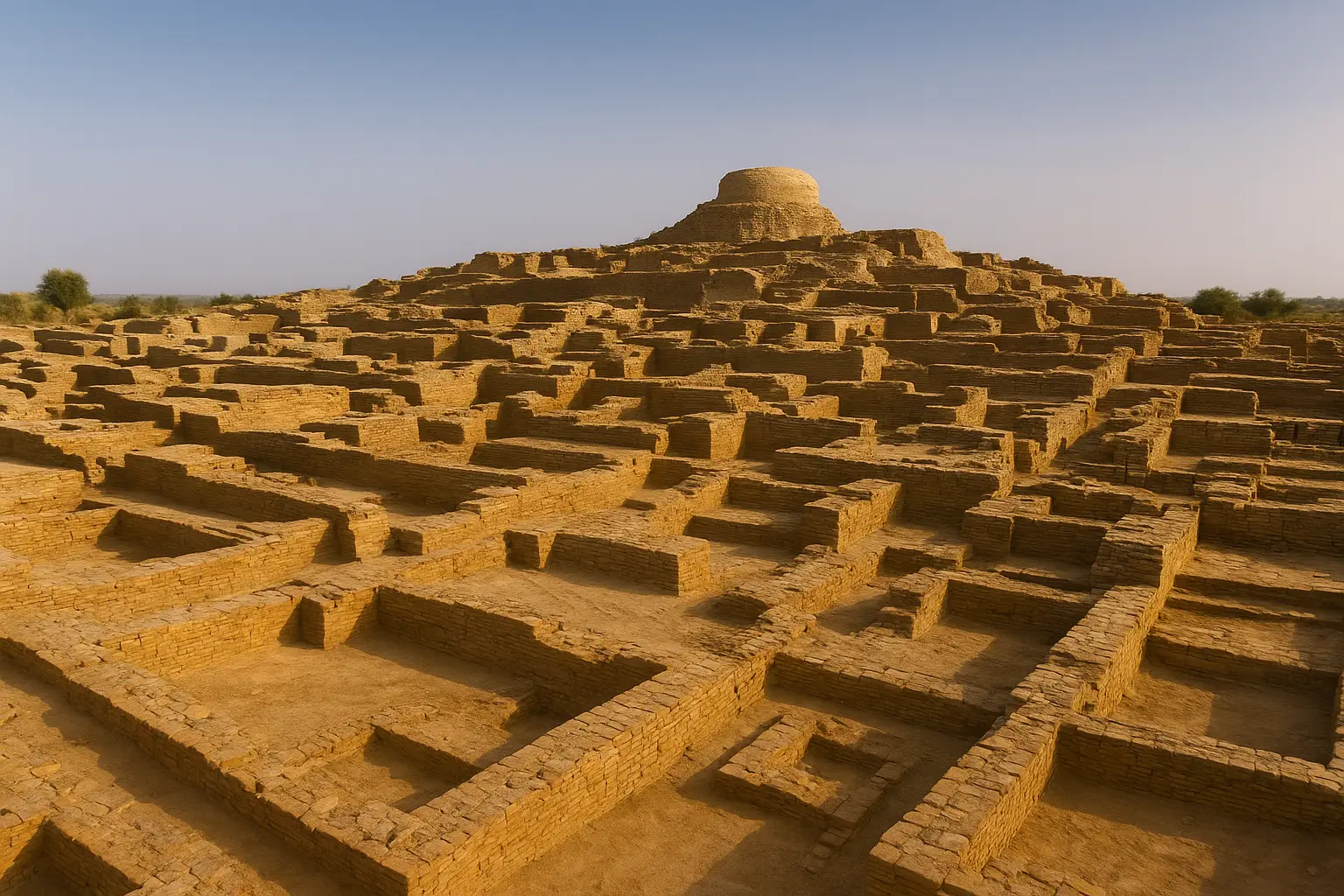
The Indus Valley Civilization (3300–1300 BCE), located in modern Pakistan and northwest India, was one of the most advanced Bronze Age civilizations. Major cities like Mohenjo-Daro and Harappa featured sophisticated city planning unmatched for centuries.
Key Contributions
- Urban Planning: Grid-style city layouts, straight streets, and standardized building materials.
- Drainage Systems: The world’s earliest known urban drainage and sewage systems.
- Trade Networks: Long-distance trade with Mesopotamia and Central Asia.
- Standardized Weights and Measures: Highly accurate systems for commerce.
Although their writing remains undeciphered, archaeological evidence reveals a peaceful, organized, and prosperous society.
4. Ancient China – The Civilization of Dynasties
Ancient China developed along the Yellow River and grew into one of the world’s longest continuous civilizations. Several dynasties—Xia, Shang, Zhou—laid foundations for culture, governance, and philosophy.
Key Contributions
- Inventions: Papermaking, the compass, gunpowder, and silk production are among China’s most influential inventions.
- Philosophy: Confucianism and Daoism shaped Chinese ethics, governance, and social values.
- Writing System: One of the world’s oldest continuously used writing systems.
- Engineering: The early construction of the Great Wall and large irrigation projects.
China’s enduring legacy left profound global impacts in technology, philosophy, and governance.
5. Mesoamerican Civilizations – Maya, Olmec, and Aztec
In the Americas, civilizations developed independently with remarkable complexity. The Olmec were the earliest (1200–400 BCE), followed by the Maya and later the Aztec.
Key Contributions
- Astronomy and Calendars: Maya astronomers created accurate calendars and predicted solar events.
- Pyramids and Architecture: Temple pyramids and ceremonial centers rivaled Old World engineering.
- Writing System: The Maya developed a fully functional hieroglyphic script.
- Agriculture: Cultivation of maize, cacao, and other crops that remain globally important.
These civilizations excelled in mathematics, engineering, and urban planning, leaving a major archaeological legacy.
6. Ancient Greece – The Birthplace of Western Civilization
Ancient Greece made foundational contributions to philosophy, democracy, science, mathematics, and literature. City-states such as Athens and Sparta played major roles in shaping Western culture.
Key Contributions
- Democracy: Athens developed the earliest form of direct democracy.
- Philosophy: Socrates, Plato, and Aristotle laid the foundation of Western thought.
- Mathematics and Science: Pythagoras, Archimedes, and Hippocrates revolutionized knowledge.
- Art and Architecture: Greek temples, sculptures, and theater deeply influenced global culture.
The Greeks set intellectual standards that shaped later civilizations and modern education.
Why Ancient Civilizations Matter Today
Ancient civilizations are not just historical topics—they provide the blueprint for modern societies. Many of our everyday systems trace their origins to these early cultures:
- Writing and language systems built on ancient scripts
- Legal systems inspired by Hammurabi’s Code
- Mathematical principles from Sumer, Egypt, and Greece
- Architectural styles influenced by Egyptian, Greek, and Mesoamerican innovation
- Calendars and astronomy with roots in ancient observations
- Governance and democracy derived from early political experiments
Understanding ancient civilizations helps historians and scientists learn how societies rise, develop, and sometimes fall—offering lessons for today’s world.
Conclusion
Ancient civilizations represent humanity’s earliest achievements, laying the intellectual, cultural, and technological foundations of modern society. From the writing systems of Mesopotamia and the monumental architecture of Egypt to the scientific achievements of Greece, the urban sophistication of the Indus Valley, the inventions of ancient China, and the astronomical brilliance of the Maya—the world we live in today is deeply connected to these early cultures.
Their enduring legacies continue to shape global knowledge, inspire academic research, and attract millions of people seeking to understand the origins of human civilization. Studying ancient civilizations is not simply looking at the past—it is exploring the roots of who we are.