Introduction
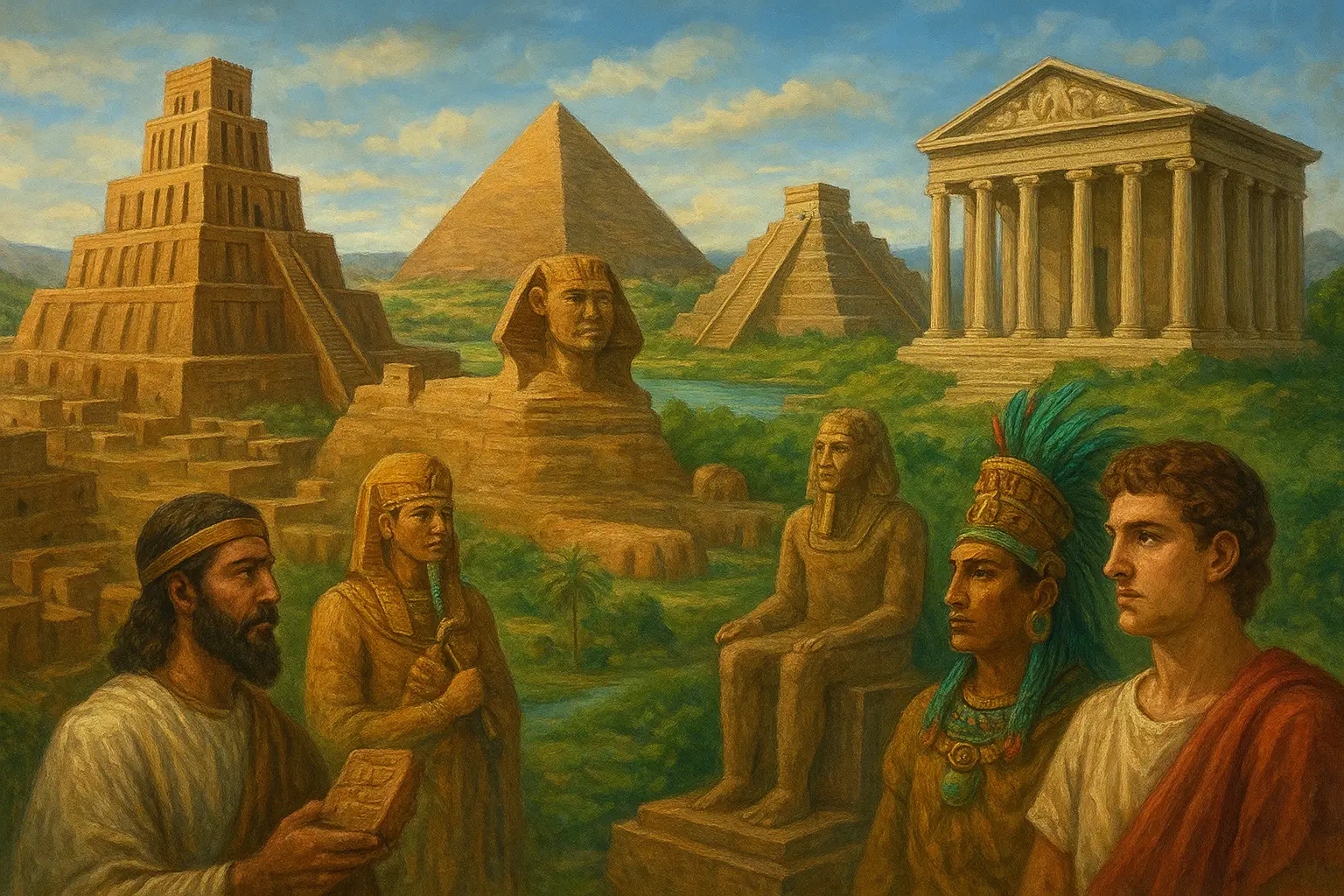
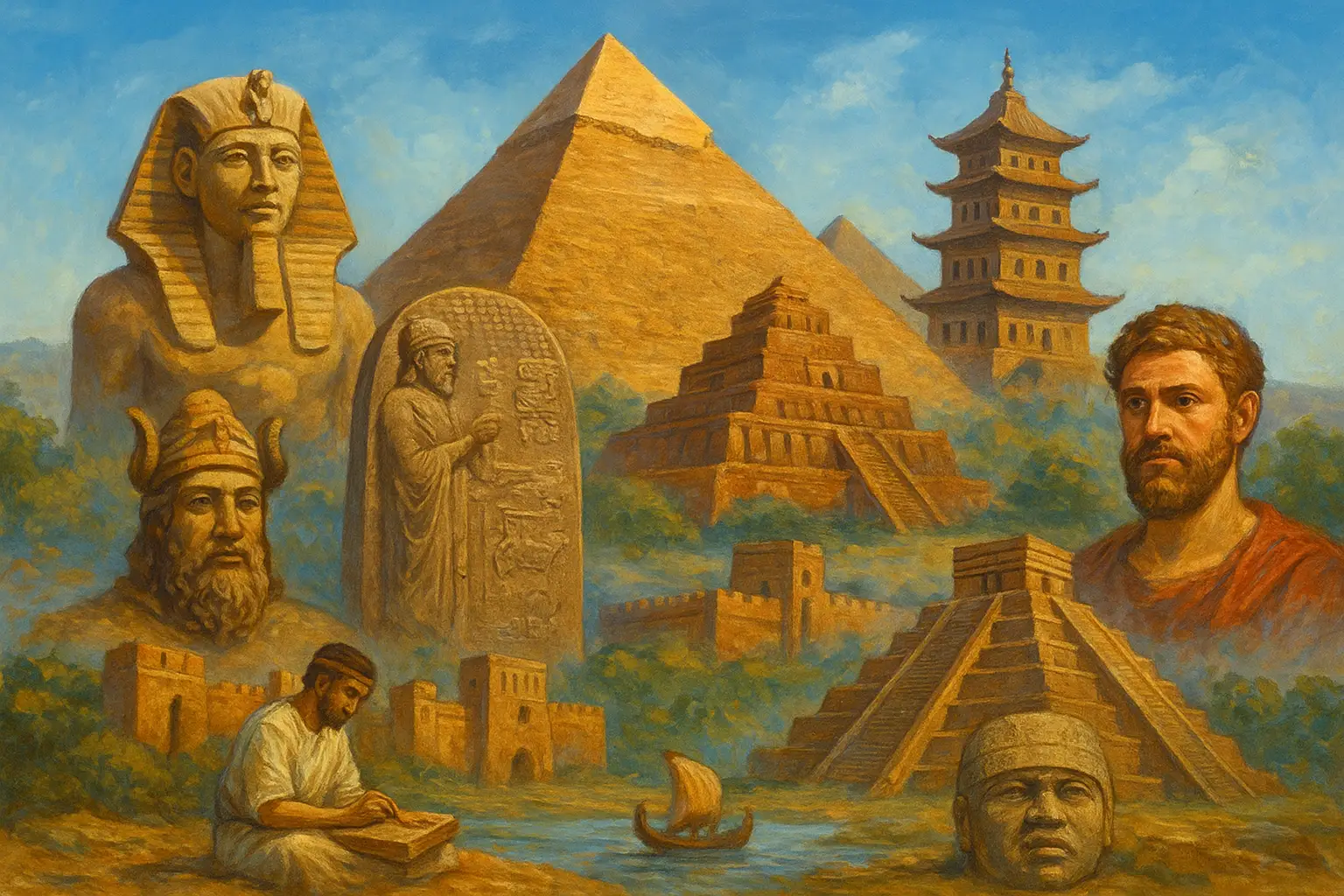
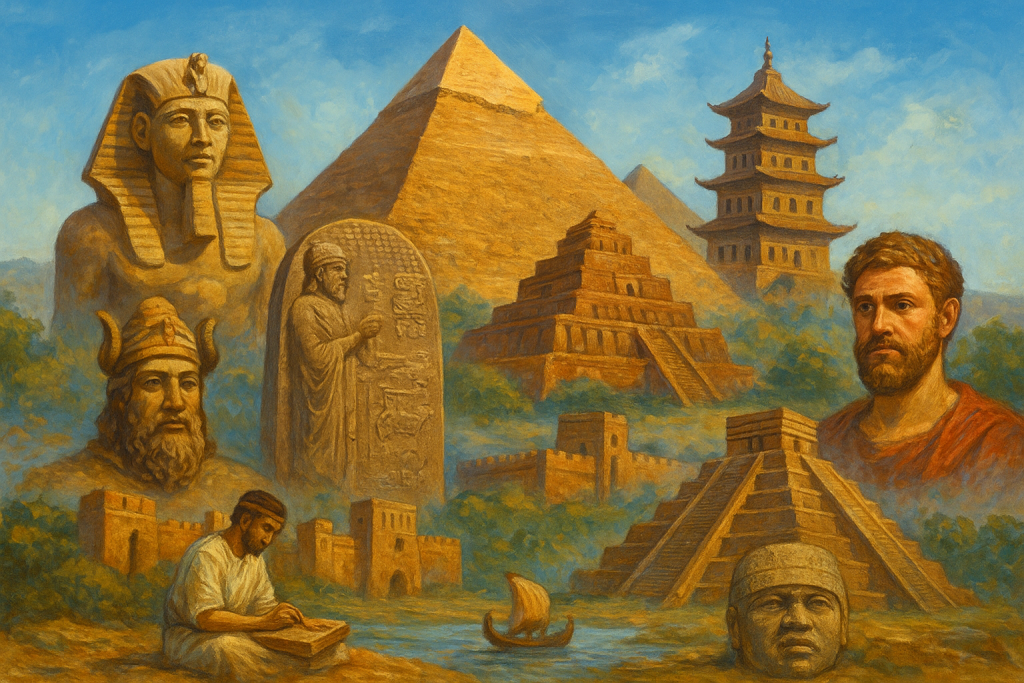
Ancient civilizations represent the earliest foundations of human society. Thousands of years before modern technology and contemporary nations, early cultures across the world created organized governments, built monumental architecture, developed writing systems, established trade networks, and formed religious traditions that shaped the future of humanity. These ancient societies—Mesopotamia, Egypt, the Indus Valley, China, Mesoamerica, the Andes, Greece, and Rome—remain some of the most frequently searched historical topics because they influenced nearly every aspect of modern life.
Understanding ancient civilizations allows us to trace the origins of human progress. Their achievements in science, mathematics, engineering, law, agriculture, and culture continue to impact modern society. This article provides a detailed, authentic, and academically supported overview of ancient civilizations, their development, and their lasting contributions to the world.
About Ancient Civilization
The term ancient civilization refers to early complex societies that emerged thousands of years ago, typically defined by:
- Cities and urban development
- Organized government and social structure
- Writing systems and record-keeping
- Advanced agriculture and irrigation
- Trade, economy, and craftsmanship
- Religious institutions and cultural traditions
- Monumental architecture
Most early civilizations arose in fertile river valleys where stable agriculture allowed populations to grow. These included:
- The Tigris–Euphrates valley of Mesopotamia
- The Nile River of Egypt
- The Indus River of South Asia
- The Yellow River of China
- Mesoamerican regions like the Yucatán Peninsula
- Andean regions along the western coast of South America
Each of these civilizations developed independently yet shared common patterns—proving that humans across the world innovated and adapted in similar ways.
Geographical Foundations of Ancient Civilizations
The Power of River Valleys
River systems shaped ancient societies by providing:
- Water for agriculture
- Fertile soil from annual flooding
- Transportation routes for trade
- Natural protection and boundaries
For example, the predictable flooding of the Nile enabled Egyptian farmers to produce consistent harvests, while Mesopotamia’s fertile crescent supported some of the world’s first urban settlements.
Agriculture and Surplus
Agricultural innovations—such as irrigation canals, plows, and grain storage—allowed early societies to produce surplus food. This surplus supported:
- Large populations
- Full-time craftsmen
- Priests, soldiers, and administrators
- Monument builders
- Traders and merchants
Surplus agriculture was one of the most important factors in the rise of civilization.
Trade and Economic Expansion
As cities grew, trade networks expanded across regions:
- Mesopotamia traded with the Indus Valley
- Egypt exchanged goods with the Levant, Greece, and Nubia
- China formed early Silk Road trade routes
- Mediterranean societies developed sea-based trade
These exchanges helped spread technology, art, writing, and religious beliefs between civilizations.
Mesopotamia: The Cradle of Civilization
Mesopotamia, located in modern-day Iraq and parts of Syria and Turkey, is widely known as the cradle of civilization.
Urban Development
Mesopotamians built some of the world’s first cities, including:
- Uruk
- Ur
- Babylon
These cities featured temples, palaces, defensive walls, and complex neighborhoods.
Writing: Cuneiform
Mesopotamia developed cuneiform, the world’s earliest known writing system. It was used to record:
- Laws
- Trade transactions
- Agricultural inventories
- Literature, such as the Epic of Gilgamesh
Law and Government
Mesopotamia produced one of history’s most important legal systems: Hammurabi’s Code, which outlined justice, rights, and responsibilities.
Science and Mathematics
Mesopotamian scholars:
- Created base-60 mathematics (basis of 60 minutes, 360 degrees)
- Observed astronomy for calendars
- Built advanced irrigation systems
Their innovations influenced later societies across the Middle East.
Ancient Egypt: Civilization of the Nile
Ancient Egypt flourished along the Nile River for over 3,000 years.
Architecture and Engineering
Egypt is world-famous for its monumental structures:
- Pyramids of Giza
- Great Sphinx
- Temples of Luxor, Karnak, and Abu Simbel
These marvels required advanced knowledge of engineering, mathematics, and labor organization.
Writing and Knowledge
Egyptians created hieroglyphics, a pictorial writing system used on tombs, temples, and papyrus. They excelled in:
- Medicine (surgery, herbal treatments)
- Astronomy
- Architecture
- Mathematics
Religion and Afterlife
Belief in the afterlife shaped Egyptian culture. Mummification, tomb building, and elaborate burial rituals reflected their spiritual worldview.
Indus Valley Civilization: Advanced Urban Planning
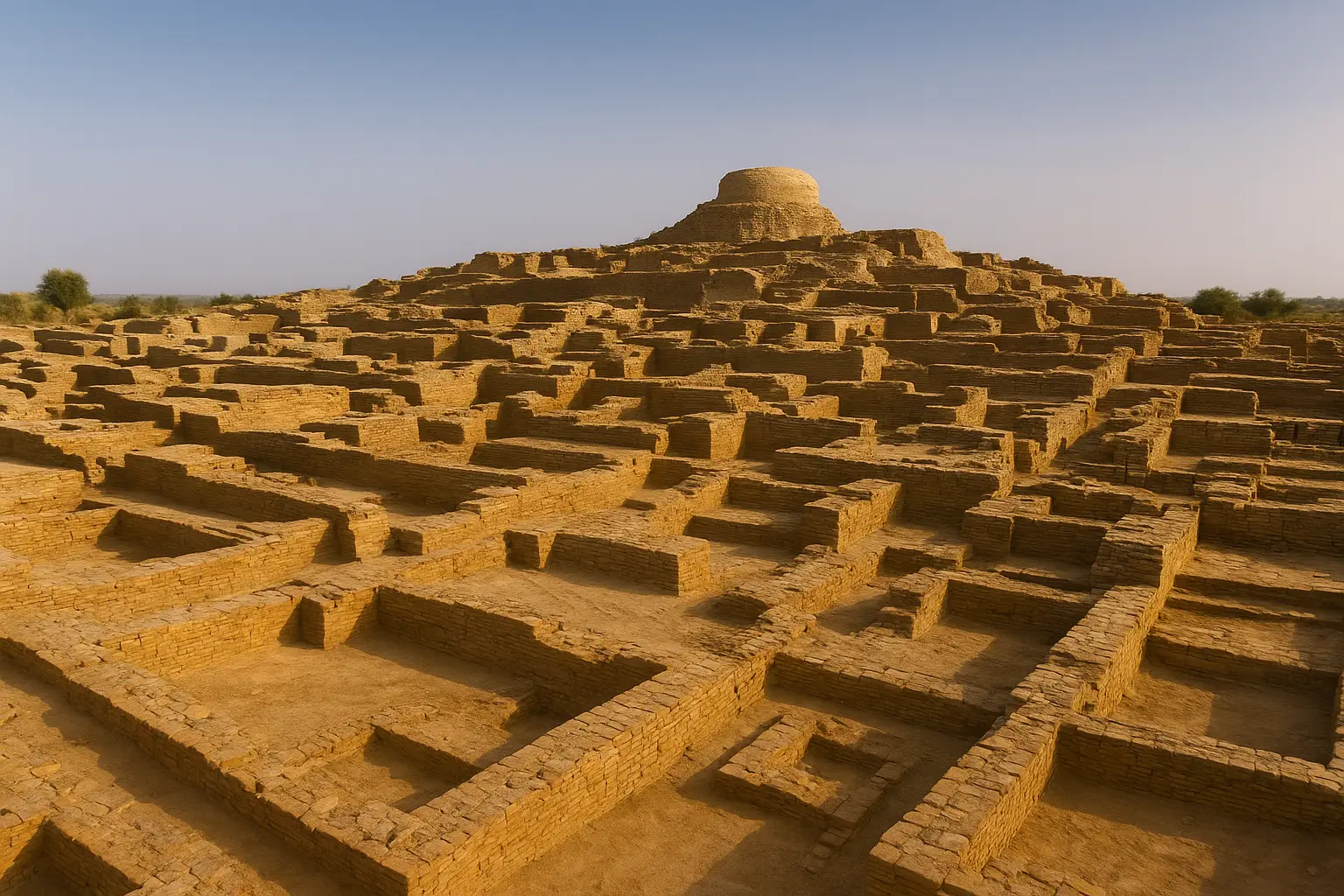
The Indus Valley Civilization, located in present-day Pakistan and northwestern India, was one of the most advanced urban societies of the ancient world.
City Planning
Cities like Harappa and Mohenjo-Daro featured:
- Grid-based streets
- Sophisticated drainage and sewer systems
- Standardized baked-brick houses
- Public baths
Their sanitation systems were more advanced than many later civilizations.
Trade and Economy
The Indus Valley had wide-ranging trade networks connecting:
- Mesopotamia
- Central Asia
- Local agricultural regions
Artifacts such as seals, pottery, beads, and tools show their craftsmanship.
Indus Script
The civilization developed a writing system, but it remains undeciphered, leaving many mysteries about their culture, politics, and language.
Ancient China: Dynasties, Innovations, and Philosophy
Ancient China emerged along the Yellow River (Huang He) under early dynasties such as the Xia, Shang, and Zhou.
Writing and Administration
The Shang Dynasty created one of the world’s oldest continuous writing systems, preserved on oracle bones.
Innovations
Ancient China produced many influential inventions:
- Silk
- Bronze tools and weapons
- Early compasses
- Paper (later invention)
- Gunpowder (later invention)
Philosophical Systems
Chinese civilization developed major philosophies that shaped world thought:
- Confucianism
- Daoism (Taoism)
- Legalism
These teachings guided government, ethics, and social relationships.
Mesoamerican Civilizations: Maya, Olmec, and Aztec
Mesoamerica produced highly advanced civilizations long before European contact.
Olmec: The First Major Civilization
Known for:
- Colossal stone heads
- Early writing and artistic traditions
Maya Civilization
The Maya excelled in:
- Writing (Maya glyphs)
- Astronomy
- Mathematics (concept of zero)
- City-states like Tikal and Palenque
- Monumental pyramids
Aztec Civilization
The Aztecs built:
- Tenochtitlan, a massive island city
- Complex agricultural systems (chinampas)
- Impressive temples and markets
Greece and Rome: Foundations of the Western World
Ancient Greece
Greece contributed enormously to human knowledge:
- Democracy in Athens
- Philosophy (Socrates, Plato, Aristotle)
- Science and mathematics
- Art and architecture
- Olympic Games
Ancient Rome
Rome expanded and refined Greek ideas, adding:
- Roman law, basis of many global legal systems
- Republican government
- Roads, bridges, and aqueducts
- Concrete architecture
- Latin language
Rome’s empire influenced Europe, North Africa, and the Middle East for centuries.
Cultural and Scientific Achievements of Ancient Civilizations
Writing Systems
Each civilization developed its own script, enabling literature, administration, and historical records.
Mathematics and Science
Advances included:
- Geometry (Egypt)
- Algebra (Mesopotamia)
- Astronomy (Maya, Mesopotamia, China)
- Engineering (Rome, Egypt, China)
Religion and Mythology
Ancient religions shaped spiritual beliefs, rituals, and temples, influencing later cultures.
Architecture
From pyramids to temples and palaces, ancient structures remain symbols of human ingenuity.
Decline of Ancient Civilizations
Ancient civilizations declined due to multiple factors:
- Natural disasters
- Invasions and warfare
- Climate change
- Economic collapse
- Disease
- Political instability
Although many disappeared, their cultural, technological, and scientific legacies continue to influence the modern world.
Conclusion
Ancient civilizations laid the foundations of modern society. Their developments in writing, agriculture, governance, science, and architecture shaped the world we live in today. From Mesopotamia’s cuneiform tablets and Egypt’s pyramids to the philosophies of Greece and the engineering feats of Rome, ancient cultures profoundly impacted human history.
Studying ancient civilizations helps us understand the origins of human knowledge, innovation, and culture. Their achievements continue to inspire researchers, scholars, and history enthusiasts worldwide, reminding us that the progress of humanity is built upon the wisdom of the past.