Introduction
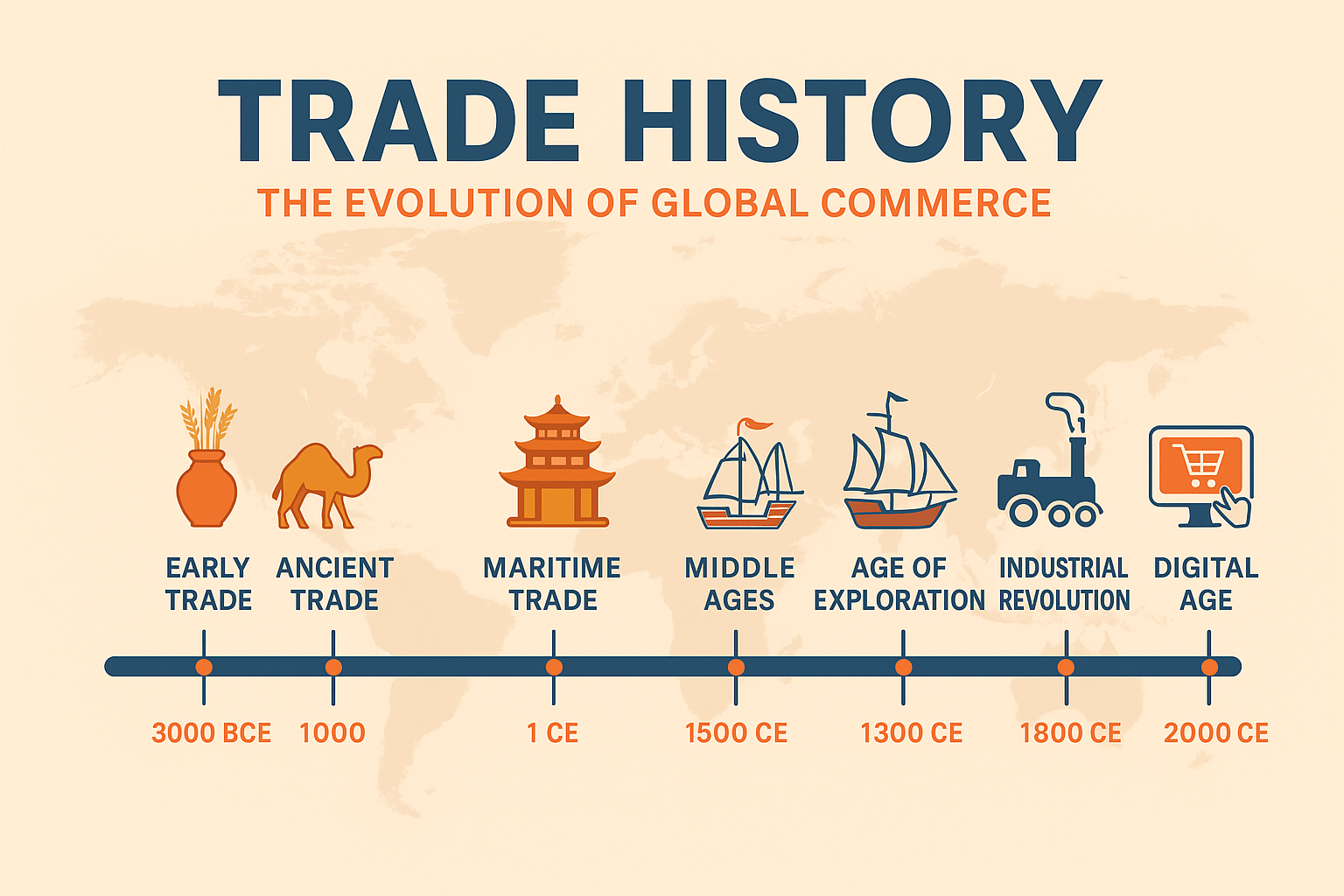
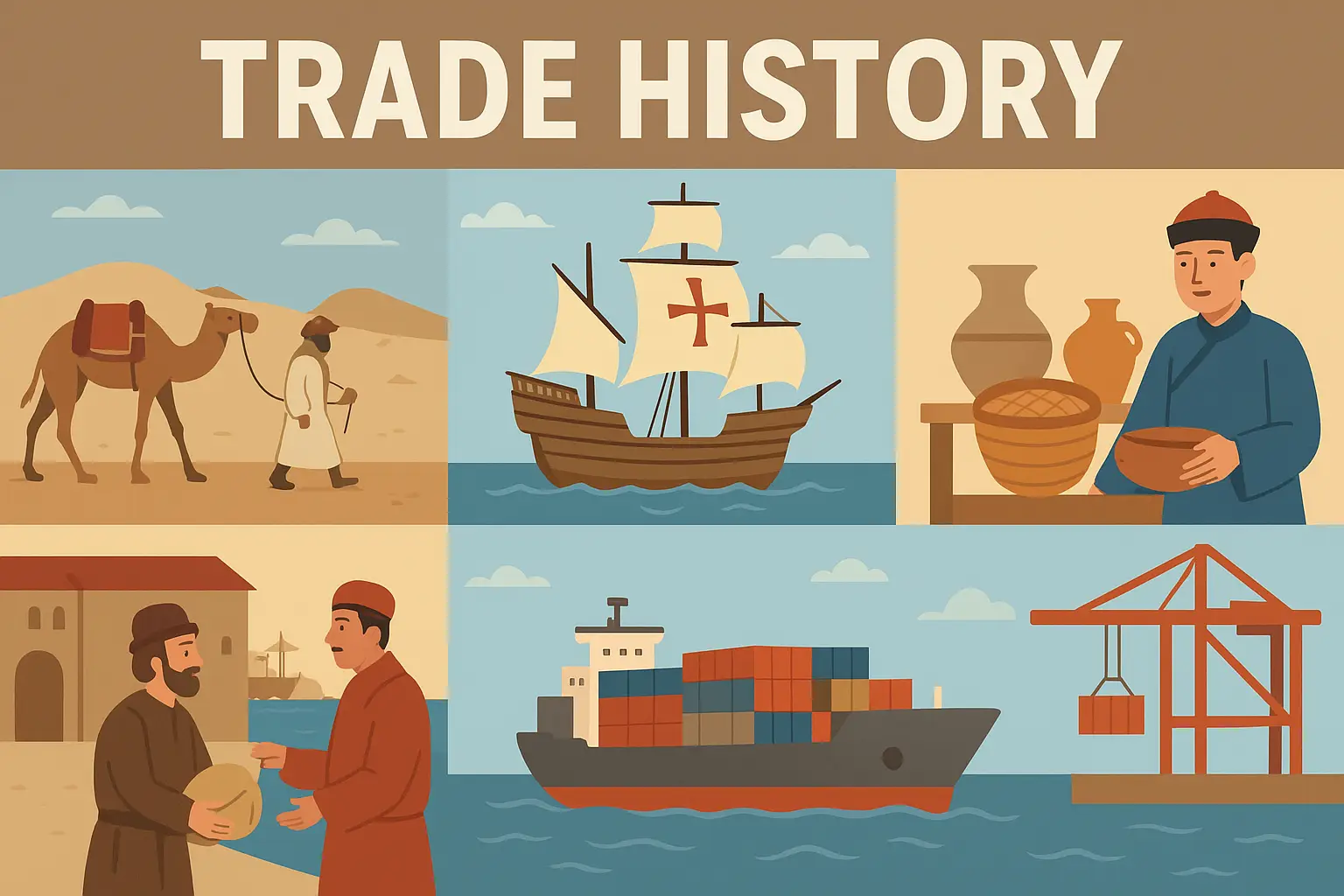
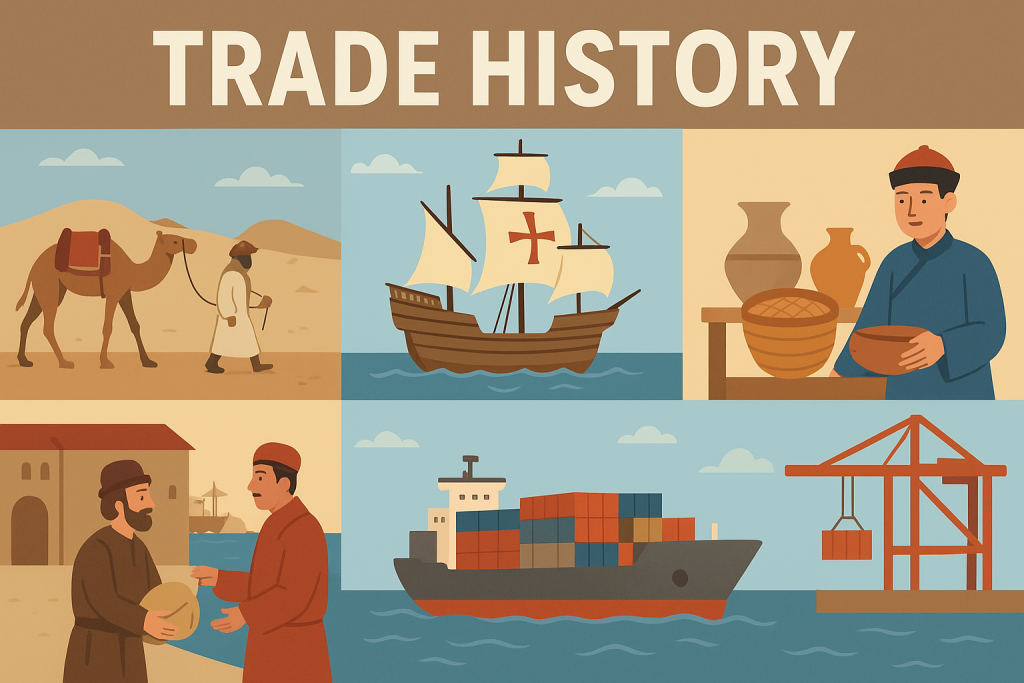
Trade history is the story of how humans exchanged goods, ideas, technologies, and cultures across continents for thousands of years. From early barter systems to global digital commerce, trade has shaped civilizations, economies, and international relations. The growth of trade networks—from the Silk Road and Indian Ocean routes to modern shipping lanes and e-commerce—created the interconnected world we live in today.
This article explores the evolution of trade, how it expanded across different eras, the rise of global markets, and how trade continues to influence world powers and everyday life.
Early Trade and the Birth of Exchange Systems
1. Barter Economy
The earliest form of trade involved direct exchange of goods—grain for pottery, livestock for tools. While simple, barter had limitations:
- Required a “double coincidence of wants”
- Hard to store value
- Difficult to transport
Despite this, barter laid the foundation for organized trade in ancient societies.
2. Rise of Currency
Around 600–500 BCE, coins made of gold, silver, and copper appeared in Lydia (modern Turkey), Greece, India, and China. These coins:
- Standardized value
- Encouraged long-distance trade
- Improved record-keeping
Money became one of the most important inventions in trade history.
Major Trade Routes of the Ancient World
1. The Silk Road
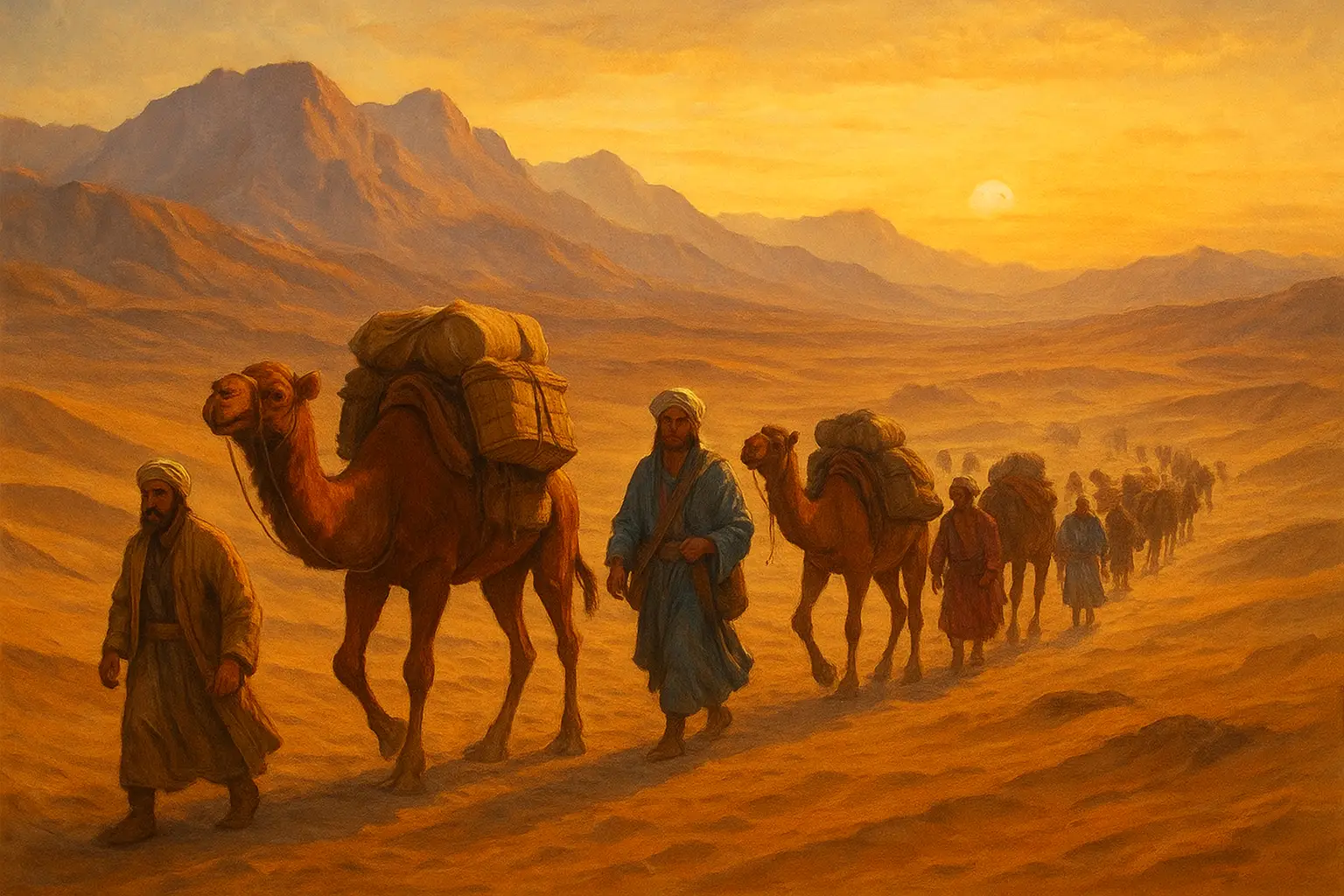
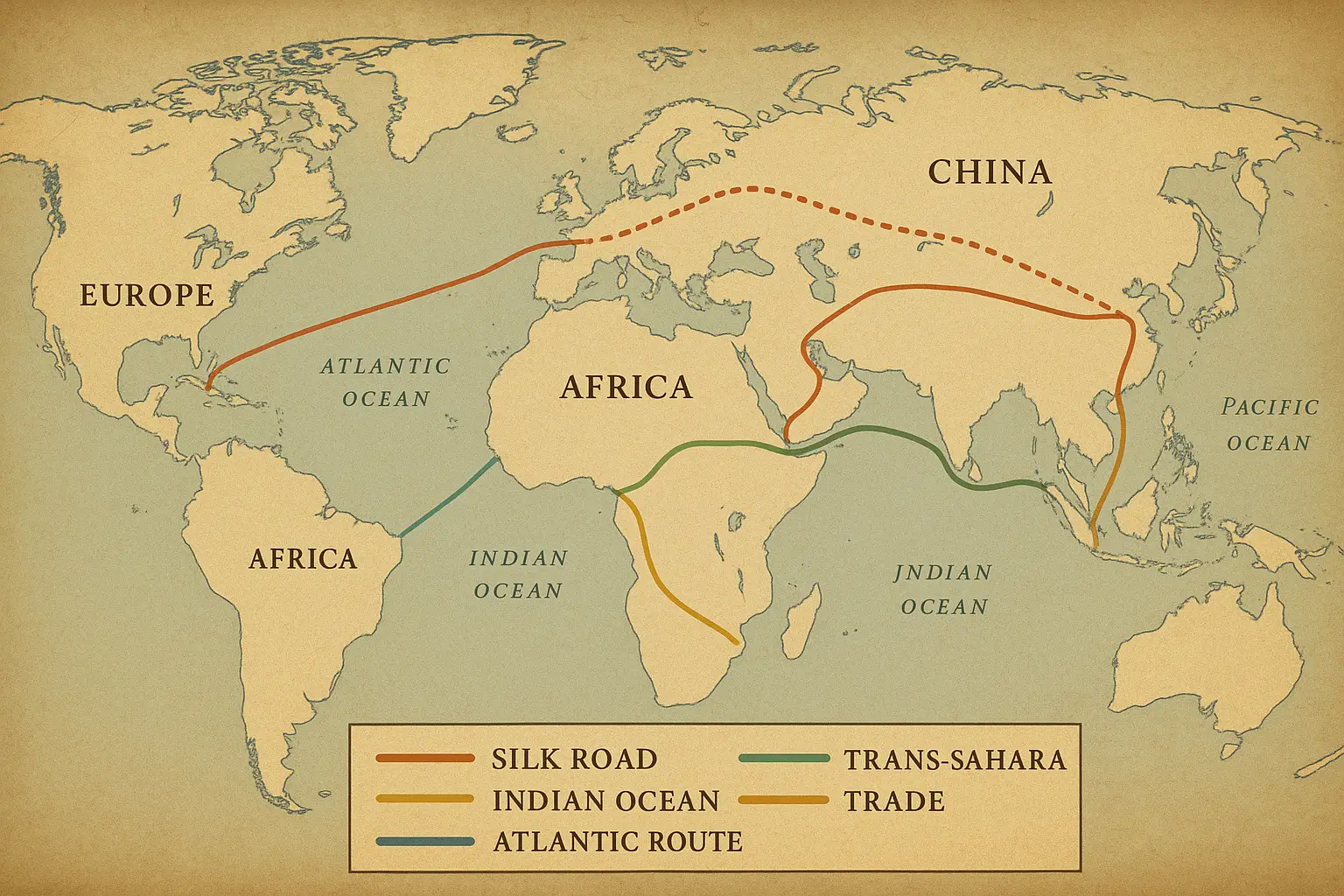
One of the most famous trade networks, the Silk Road connected China with Central Asia, the Middle East, and Europe. It enabled the exchange of:
- Silk, spices, tea
- Horses, glassware, metals
- Religion, culture, and technologies
The Silk Road expanded global communication and economic power.
2. Indian Ocean Trade
This network connected East Africa, Arabia, India, Southeast Asia, and China. Dhows and large ships transported:
- Spices
- Textiles
- Gold and ivory
- Porcelain
Monsoon winds made travel predictable, helping merchants build powerful trading cities such as Zanzibar, Calicut, and Malacca.
3. Trans-Saharan Trade
Caravans carrying salt, gold, and slaves crossed the vast Sahara Desert. Key African empires like Ghana, Mali, and Songhai flourished by controlling this trade. Timbuktu became a global center of learning and commerce.
Medieval Trade and the Rise of Commerce (500–1500 CE)
1. Islamic Golden Age and Trade Expansion
The spread of Islam connected regions from Spain to India. Muslim traders introduced:
- Banking systems
- Bills of exchange
- Credit and partnerships
These innovations improved safety and efficiency in trade.
2. European Merchant Guilds
In Europe, merchant guilds controlled prices, quality, and trade rights. Cities like Venice and Genoa became maritime superpowers, dominating Mediterranean trade.
3. Hanseatic League
A powerful alliance of European trading cities, the Hanseatic League controlled commerce in the Baltic and North Sea. Its network standardized rules and protected merchant interests.
Age of Exploration and Global Trade (1500–1800)
1. European Exploration
Nations such as Spain, Portugal, England, and France explored the Americas, Africa, and Asia. Their goals:
- Find new trade routes
- Acquire spices, gold, and land
- Expand influence
This era created the first truly global trade system.
2. Columbian Exchange
This massive exchange changed world history by transferring:
- Crops: potatoes, maize, sugar
- Animals: horses, cattle
- Diseases: smallpox
The Columbian Exchange reshaped diets and populations across continents.
3. Rise of Maritime Companies
European powers formed companies like:
- British East India Company
- Dutch East India Company (VOC)
These companies controlled trade in spices, textiles, and raw materials, eventually influencing politics and colonization.
Industrial Revolution and the Modern Trade Boom (1800–1945)
1. Mechanization and Mass Production
The Industrial Revolution introduced factories, machines, and faster production, creating:
- Higher output
- Lower costs
- Growing demand for raw materials
Countries needed new markets, fueling global trade expansion.
2. Steamships and Railways
Transportation improvements revolutionized trade:
- Steamships reduced travel time across oceans
- Railways linked ports with inland regions
- Telegraph and telephone improved communication
Trade became faster, safer, and more reliable.
3. Colonial Economic Systems
European powers controlled colonies to extract raw materials like:
- Cotton
- Rubber
- Tea
- Oil
These materials fed industries back home, strengthening Western economies.
The Post-War Global Trade Order (1945–1990)
1. Bretton Woods and New Institutions
After World War II, nations created economic institutions to stabilize global trade:
- IMF (International Monetary Fund)
- World Bank
- GATT, later replaced by WTO (World Trade Organization)
These institutions promoted free trade and reduced tariffs.
2. Globalization Begins
New technologies such as shipping containers and air cargo made worldwide trade cheaper and efficient. Multinational companies emerged, distributing production worldwide.
3. Oil Trade Dominance
Oil became the world’s most strategic resource. Middle Eastern nations, through OPEC, became major players, influencing global prices and politics.
Digital Age and Global Trade (1990–Present)
1. Rise of E-Commerce
Platforms like Amazon, Alibaba, Daraz, and Flipkart transformed how people buy and sell goods. Digital payments, online marketplaces, and logistics networks created a new era of convenience.
2. China as a Global Trade Giant
China’s rise as the “world’s factory” changed global supply chains. Manufacturing and export-led growth made China one of the top trading nations.
3. Free Trade Agreements
Modern trade relies on agreements like:
- NAFTA / USMCA
- European Union single market
- ASEAN free trade
These agreements reduce barriers and connect economies.
4. Global Supply Chains
Companies now produce parts in multiple countries before final assembly. For example:
- A smartphone may involve materials from Africa
- Manufacturing from China
- Software from the US
Supply chains make trade deeply interconnected but vulnerable to disruptions.
5. Digital Services Trade
In the 21st century, trade is not only physical goods—digital services are now major exports:
- Software
- IT services
- Cloud computing
- Online education
Countries like India have become leaders in service exports.
Challenges in Modern Trade
Trade today faces several issues:
- Trade wars and tariffs
- Currency fluctuations
- Shipping disruptions
- Political conflicts
- Climate change affecting resources and transport
Nations work through global institutions to manage these challenges.
Conclusion
Trade history is the story of human connection. From the Silk Road to online marketplaces, trade has shaped cultures, economies, and global power structures. It has influenced everything—from the foods we eat to the technologies we use.
Today’s globalized world is the result of thousands of years of evolving trade networks, innovations, and cooperation. As digital technologies grow and nations become increasingly connected, trade will continue to shape the future of the global economy.