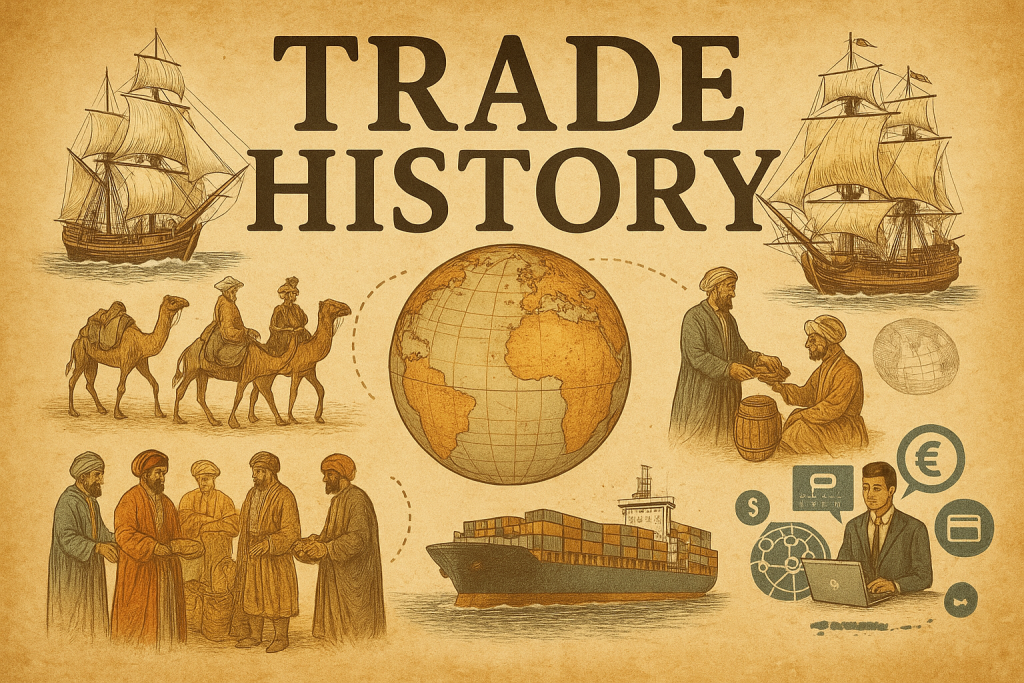
Introduction
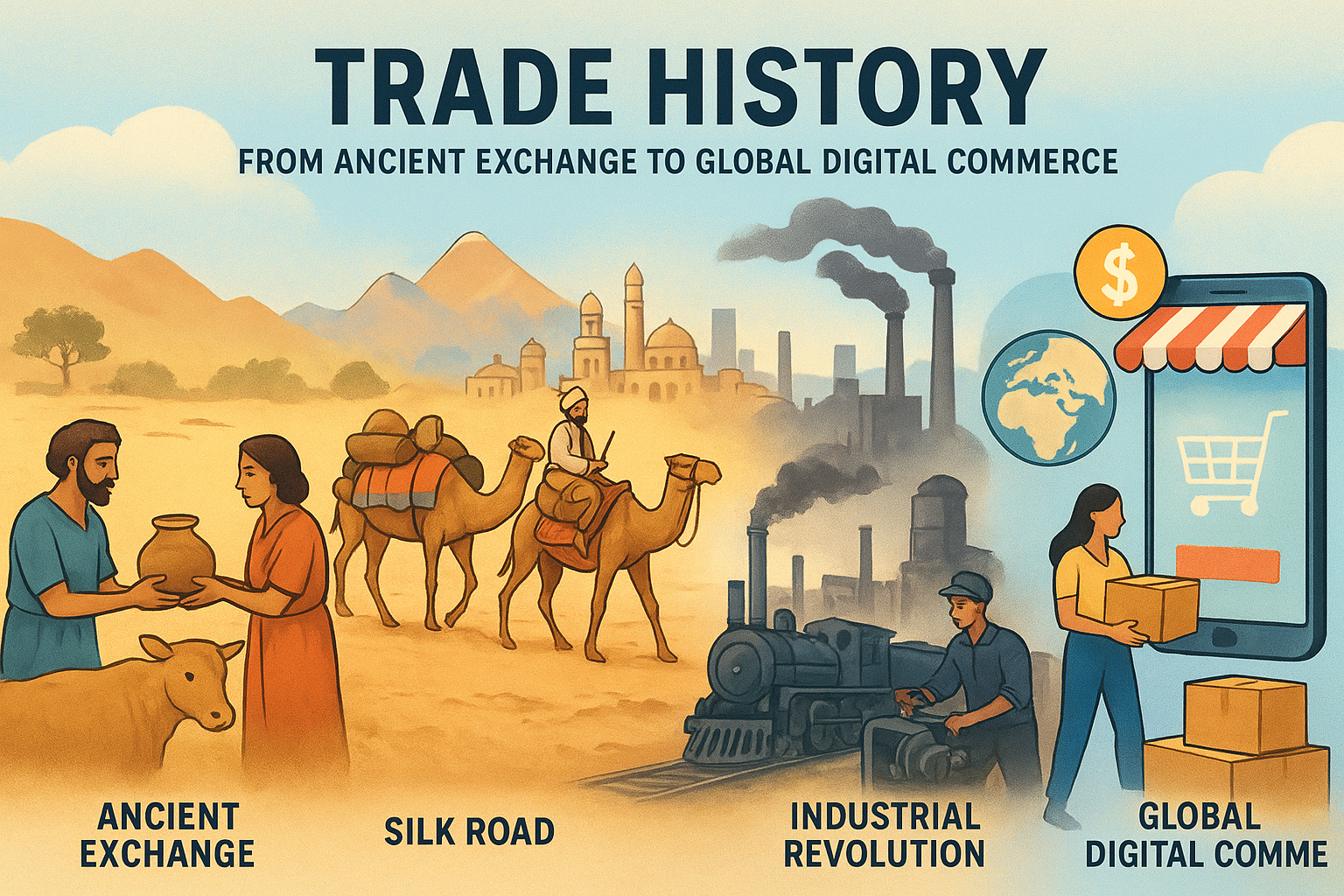
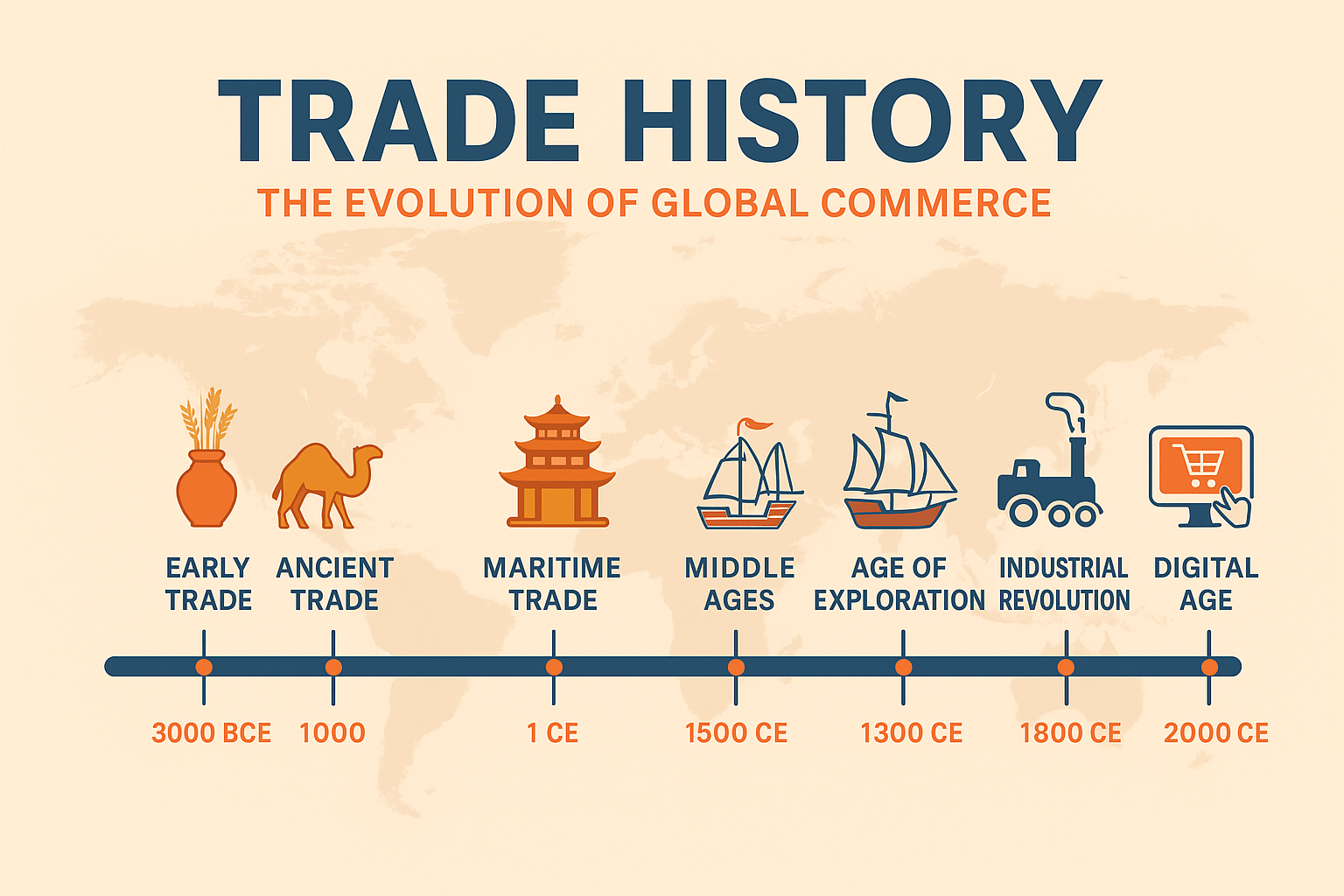
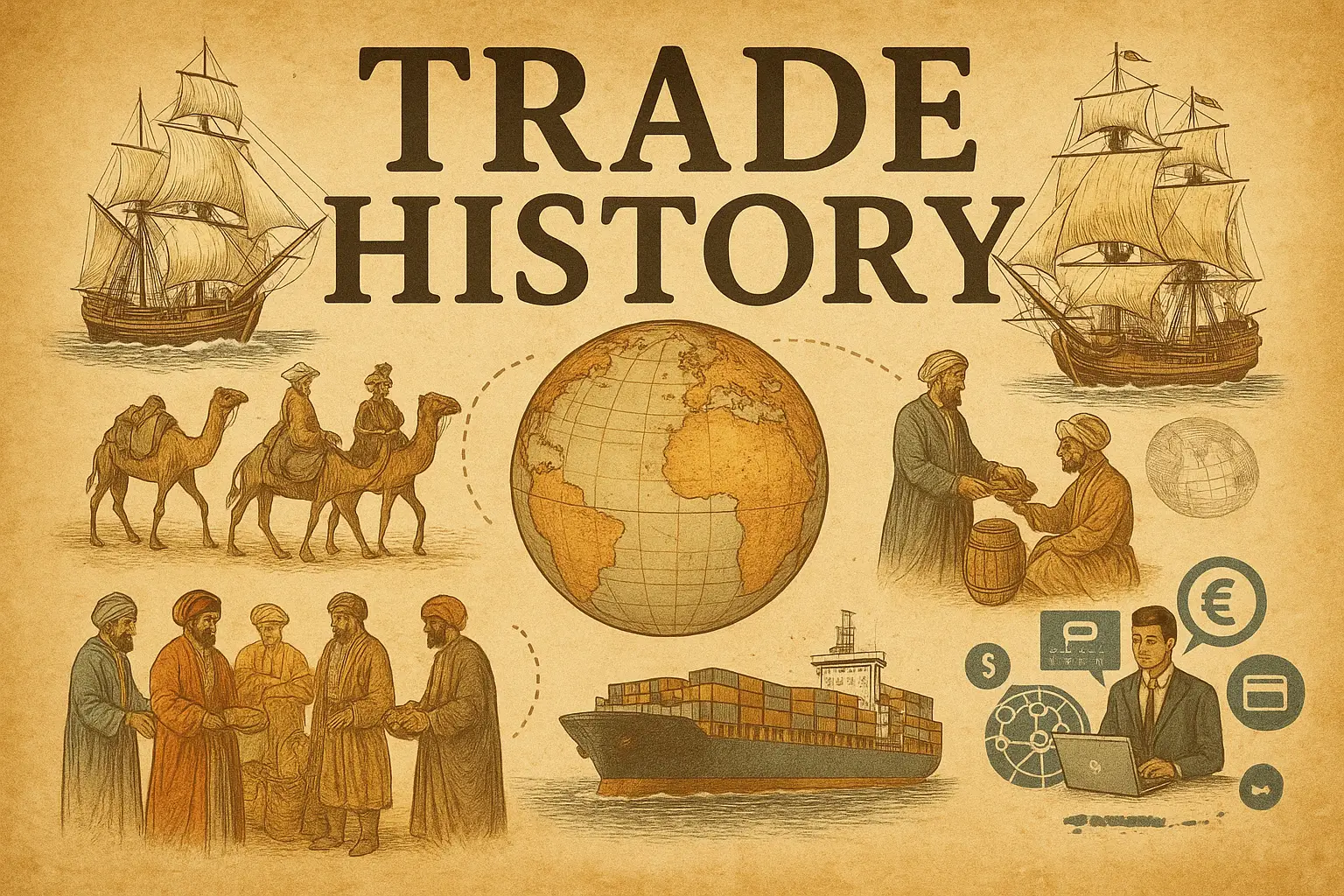
Trade history is one of the most important subjects for understanding how civilizations grew, how nations became powerful, and how the modern global economy was built. From ancient barter systems and early trade routes to modern international markets and digital commerce, trade has influenced human societies for thousands of years. It shaped cultures, spread technologies, connected continents, and transformed economies. This article explores the complete evolution of trade history using clear explanations, top-searched keywords, and human-friendly storytelling.
What Is Trade History?
Trade history is the study of how people, societies, and nations exchanged goods and services over time. It covers:
- Ancient trade networks
- Silk Road and maritime routes
- Rise of merchant empires
- Industrial-era trade
- Colonial trade systems
- Globalization
- Digital and e-commerce trade
Trade history helps explain how countries became rich or poor, how cultures spread, and how the modern world became interconnected.
1. Early Trade: The Beginning of Exchange
The earliest form of trade began with barter, where people exchanged goods without using money. Examples include:
- Grains for metals
- Livestock for tools
- Cloth for pottery
Ancient civilizations such as Mesopotamia, Egypt, China, and the Indus Valley were among the first to develop organized trade. They exchanged:
- Gold
- Spices
- Cotton
- Silk
- Salt
- Precious stones
Impact of Early Trade
- Development of early cities
- First transport networks
- Cultural and language exchange
- Introduction of currency systems
Trade became the foundation of early economics and allowed small settlements to grow into powerful empires.
2. Silk Road: The World’s Most Famous Trade Route
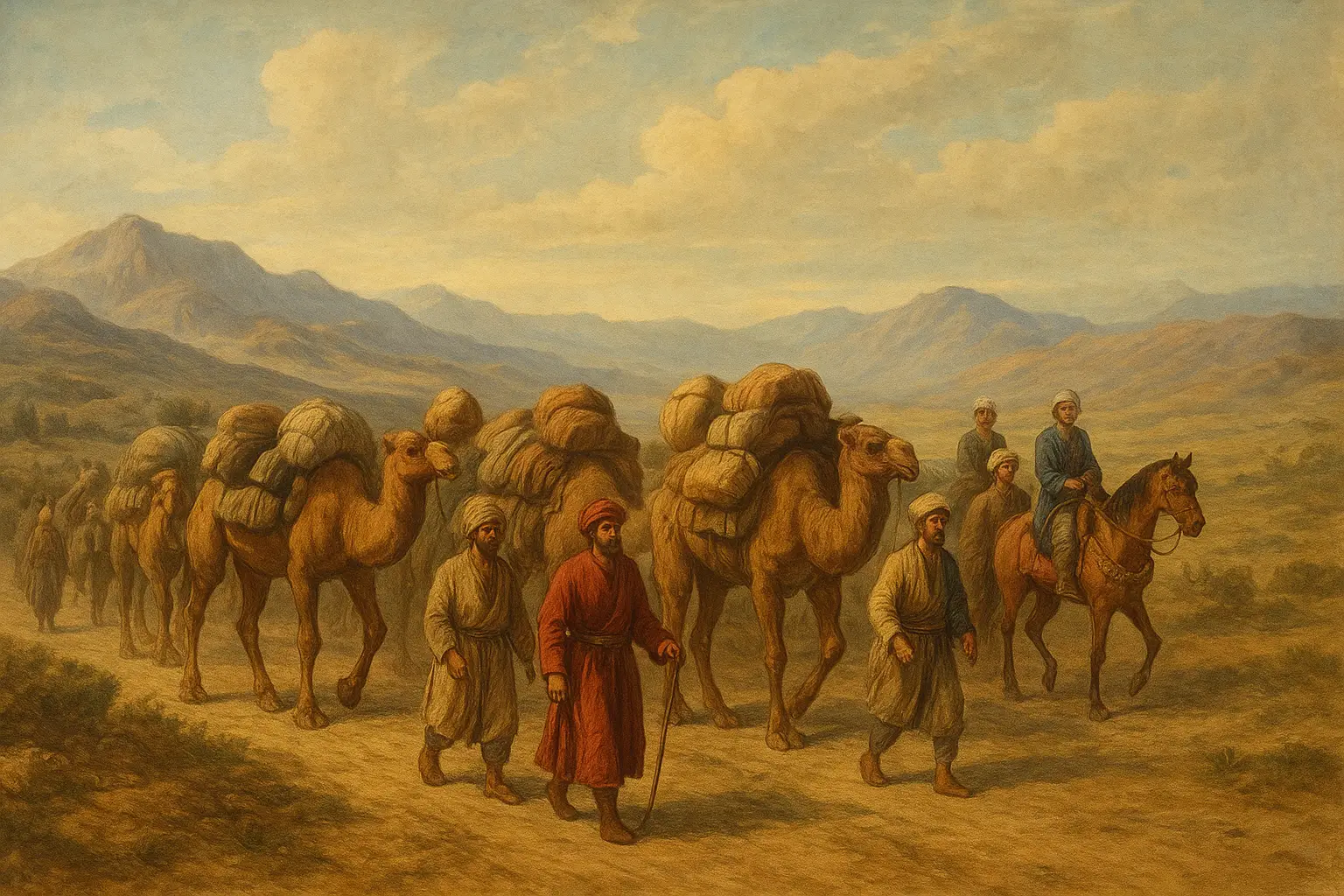
One of the most frequently searched topics in trade history is the Silk Road, which connected Asia, the Middle East, and Europe for more than 1,500 years.
Goods Traded on the Silk Road
- Silk, spices, tea, porcelain (from China)
- Gold, glass, olive oil, wine (from Europe)
- Cotton, gems, sugar, and horses (from India and Central Asia)
Why the Silk Road Was Important
- Spread of religions like Buddhism, Islam, and Christianity
- Exchange of inventions like paper, printing, and gunpowder
- Linking of cultures from East to West
- Growth of cities like Samarkand, Kashgar, and Baghdad
The Silk Road was not just a trade route; it was a highway for knowledge, culture, and innovation.
3. Maritime Trade and the Age of Exploration
Between the 15th and 17th centuries, global maritime trade exploded. European explorers like:
- Christopher Columbus
- Vasco da Gama
- Ferdinand Magellan
searched for new sea routes to Asia and Africa to access spices, gold, and luxury goods.
Major Effects of Maritime Trade
- Discovery of the Americas
- Establishment of global shipping routes
- Rise of European empires
- Spread of new foods: potatoes, tomatoes, chili, cocoa
- Beginning of large-scale international commerce
This period reshaped global trade and increased the power of countries with strong navies.
4. Rise of Merchant Companies and Global Trade
In the 17th and 18th centuries, powerful trading companies emerged, such as:
- British East India Company
- Dutch East India Company (VOC)
- French East India Company
These companies controlled trade on a massive scale and helped European nations dominate global markets.
What They Traded
- Spices
- Tea
- Cotton
- Silk
- Tobacco
- Sugar
Their Influence
- Built ports and shipping networks
- Controlled entire regions
- Formed early capitalism
- Helped shape modern corporations
They were among the first global businesses and influenced global politics and economics.
5. Industrial Revolution and Modern Trade Expansion
The Industrial Revolution transformed trade more than any previous period. Starting in Britain in the late 18th century, it introduced factories, machines, and mass production.
Major Changes
- Cheap production of textiles and metal goods
- Rise of factories and industrial cities
- Steamships and railways boosted transportation
- Growth of international trade
- Increased demand for raw materials
Europe and the U.S. became major industrial powers and exported manufactured goods while importing raw materials from colonies.
6. Colonial Trade and Global Power
During the 18th and 19th centuries, European colonial powers used trade to control vast parts of Asia, Africa, and the Americas. This system shaped modern global inequality.
Key Features of Colonial Trade
- Colonies supplied raw materials: cotton, tea, sugar, rubber
- Europeans exported finished goods
- Trade benefited colonial powers more than colonies
- New global markets were created
While colonialism expanded trade, it also created economic exploitation that still affects many regions today.
7. 20th Century Trade: Global Institutions and Cooperation
The 20th century saw major changes due to world wars, economic crises, and global restructuring.
Important Trade Institutions Created
- GATT (General Agreement on Tariffs and Trade)
- WTO (World Trade Organization)
- IMF
- World Bank
- United Nations Trade and Development
These institutions promoted free trade, reduced tariffs, and regulated global economic policies.
Effects
- Growth of global markets
- Standardization of rules and agreements
- Stabilization of international finance
- Opening of new trade routes
The world became more connected and dependent on international trade.
8. Globalization and Modern Trade Systems
From the late 20th century onward, globalization became the most important force shaping trade.
Key Features of Globalization
- International supply chains
- Multinational corporations
- Outsourcing and offshore production
- Free-trade zones (EU, NAFTA, ASEAN)
- Global transportation and communication
Goods can now be produced in one country, assembled in another, and sold worldwide — all within days.
Examples
- Smartphones made with components from 20+ countries
- Clothing produced in Asia and sold in Europe/US
- Cars assembled in global manufacturing hubs
Globalization created a deeply interconnected world economy.
9. Digital Trade and E-Commerce (21st Century)
In recent years, digital trade has become one of the most searched topics in economic history.
Types of Digital Trade
- E-commerce
- Digital services
- Software and cloud computing
- Online payments
- Freelancing and remote work
Companies like:
- Amazon
- Alibaba
- Shopify
have transformed how people buy and sell goods.
Impact of Digital Trade
- Faster global transactions
- Access to worldwide markets
- Growth of small businesses
- New business models such as dropshipping
- Rise of digital currencies and fintech
The digital revolution is now shaping the future of global trade.
How Trade History Shapes the Modern World
Trade history has left a deep impact on:
1. Economies
- Wealth distribution
- Industrial growth
- Modern banking systems
2. Culture
- Food exchange
- Languages and religions
- Fashion and art
3. Technology
- Transportation
- Communication
- Production systems
4. Politics
- Global organizations
- Diplomatic relations
- Trade alliances
Trade is the backbone of globalization and modern development.
Conclusion
Trade history tells the story of human growth, exploration, innovation, and global connection. From ancient barter networks and the Silk Road to the industrial age and today’s digital economy, trade has shaped societies, cultures, and nations. Understanding trade history helps us understand how the world works today — how goods travel across continents, how economies rise and fall, and how technology continues to transform global markets. Trade is not just the exchange of goods; it is the exchange of ideas, cultures, and opportunities that continues to build our modern world.