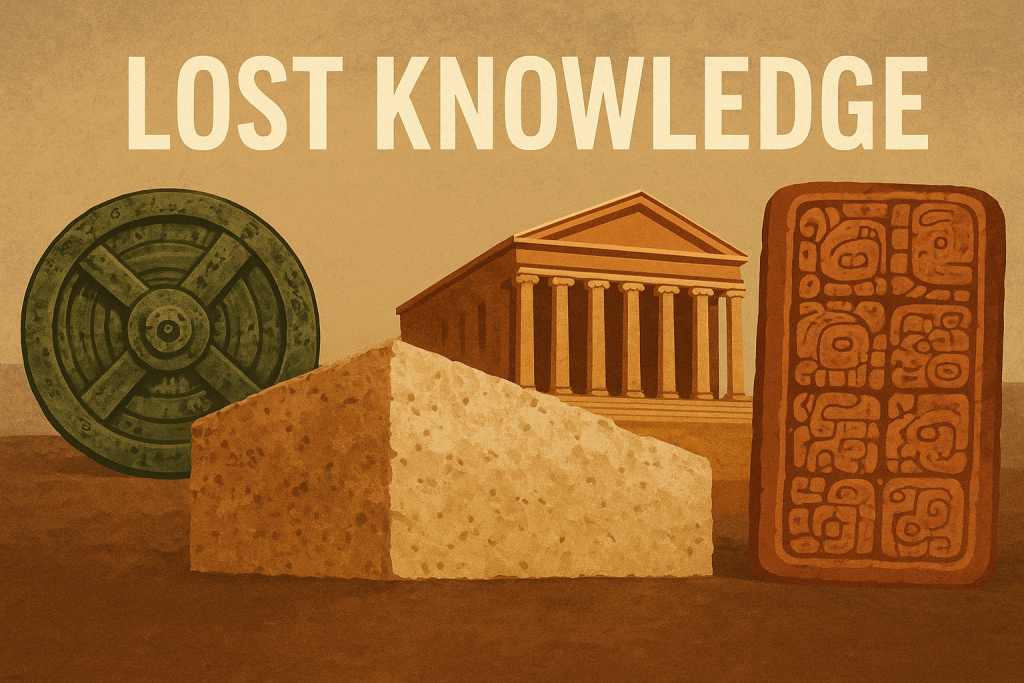
Introduction
Throughout human history, civilizations have risen to extraordinary heights of scientific, technological, and cultural sophistication. Yet much of the knowledge that once fueled these advancements has been lost — erased by war, disaster, colonization, cultural collapse, or the slow erosion of time. Today, historians and researchers continue to uncover traces of these forgotten systems of knowledge, often revealing advanced techniques that modern science is only beginning to understand.
“Lost knowledge” remains one of the most frequently searched historical topics because it touches on some of humanity’s greatest puzzles: How did ancient societies achieve such remarkable feats? What technologies or sciences did they master that were later forgotten? And what could the world look like today if this knowledge had survived?
This article explores some of the most fascinating, well-documented examples of lost knowledge that continue to intrigue researchers around the world.
The Antikythera Mechanism: The Ancient Greek Computer
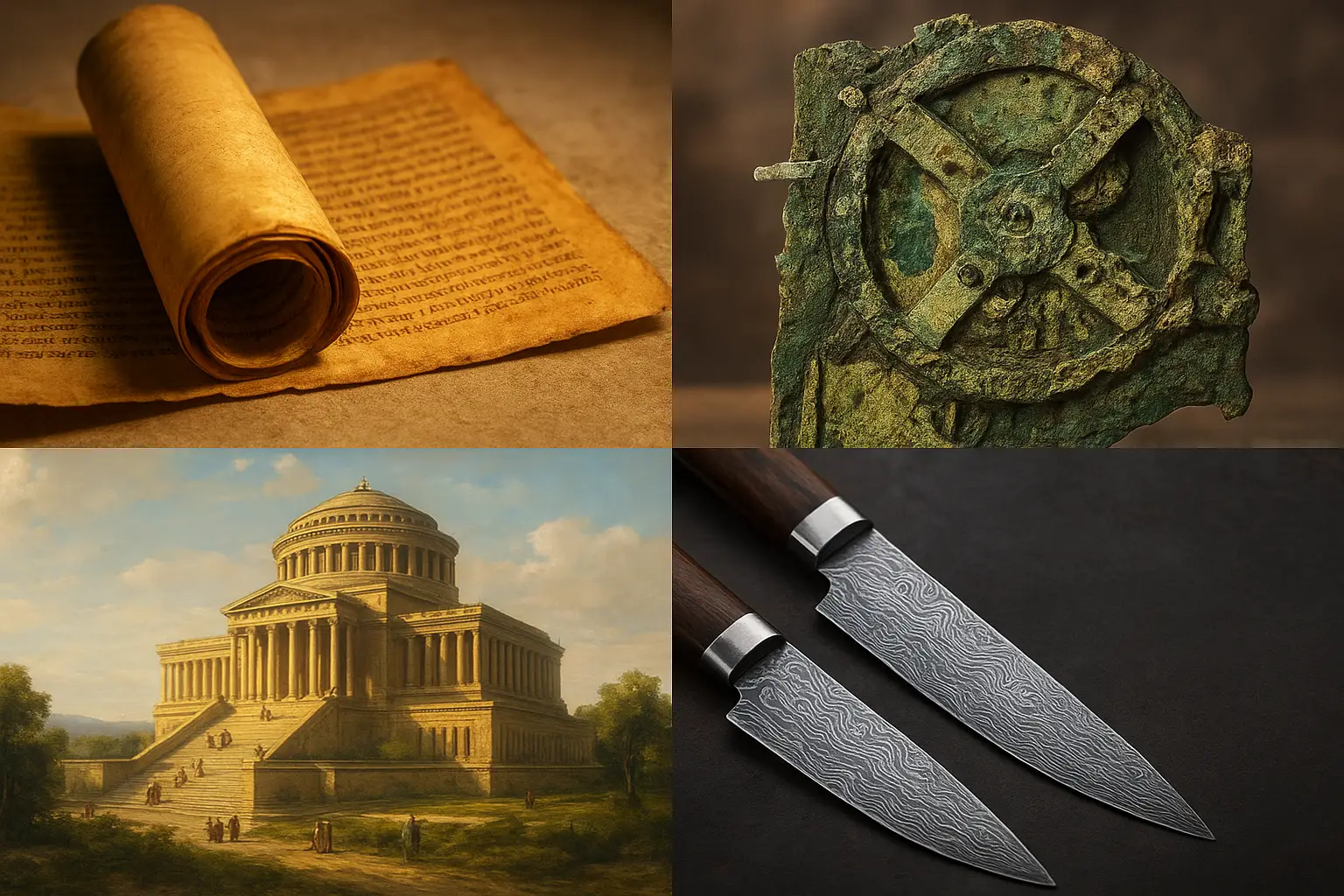
One of the most iconic examples of lost knowledge is the Antikythera Mechanism, discovered in 1901 in a shipwreck off the Greek island of Antikythera. Dating to around 150–200 BCE, this mechanical device stunned the scientific community.
What It Could Do
- Track the movements of the Sun, Moon, and planets
- Predict solar and lunar eclipses
- Calculate the timing of ancient Olympic games
- Model complex astronomical cycles with astonishing accuracy
The mechanism contained precision gears that rival medieval clockmaking — technology believed not to exist for another thousand years.
Why It’s Considered Lost Knowledge
The Greeks clearly possessed advanced mechanical engineering skills, yet no other device like it has ever been found. The knowledge required to build such technology disappeared from historical records, leaving researchers to speculate on how widespread such mechanisms once were.
Roman Concrete: A Building Material That Outlasts Time
Many ancient Roman structures — aqueducts, harbors, temples, and the Pantheon — have survived more than 2,000 years. Shockingly, Roman concrete often becomes stronger with time, whereas modern concrete typically degrades within a century.
The Secret Ingredient
Researchers recently identified why Roman concrete is so durable:
- Volcanic ash
- Lime
- Seawater
- Rare crystalline compounds (like tobermorite) formed naturally over time
Roman builders created a self-healing concrete that repaired cracks through chemical reactions.
Why the Knowledge Was Lost
After the collapse of the Western Roman Empire, the exact recipe and techniques vanished. Medieval construction methods shifted toward stone, and the formula for Roman concrete was forgotten for centuries.
Modern engineers now study Roman methods to create more durable, eco-friendly building materials inspired by ancient innovations.
The Library of Alexandria: The Greatest Intellectual Loss in History
The Library of Alexandria was the most ambitious knowledge center of the ancient world. Housing hundreds of thousands of scrolls, it contained works on mathematics, astronomy, medicine, physics, philosophy, engineering, literature, and global languages.
What Was Lost
- Original works by Euclid, Archimedes, Eratosthenes, and other legendary scholars
- Early maps of the world
- Medical treatises and surgical knowledge
- Literature from across Egypt, Greece, India, Persia, Babylonia, and beyond
Some historians believe that if the library had survived, human technological progress might have accelerated by centuries.
How It Disappeared
The library suffered multiple destructive events across centuries:
- Fires during Julius Caesar’s campaign
- Political violence
- Religious conflicts
The cumulative damage erased an enormous portion of ancient scientific knowledge.
The Mayan Writing System: A Lost Language Reborn
The Maya developed one of the most sophisticated writing systems in the ancient world, using:
- Logograms
- Phonetic symbols
- Complex mathematical notation
Yet much of this knowledge disappeared after the arrival of the Spanish in the 16th century.
How It Was Lost
- Colonial authorities burned countless texts
- Only four verified Maya codices survive today
- Scholars struggled for centuries to decode the script
Rediscovery
In the 20th century, linguists, archaeologists, and Indigenous contributors successfully deciphered much of the writing system, revealing rich histories of astronomy, mathematics, political events, and cosmology.
The Maya case shows that lost knowledge can sometimes be recovered — but only with immense effort.
Damascus Steel: The Lost Art of Legendary Blades
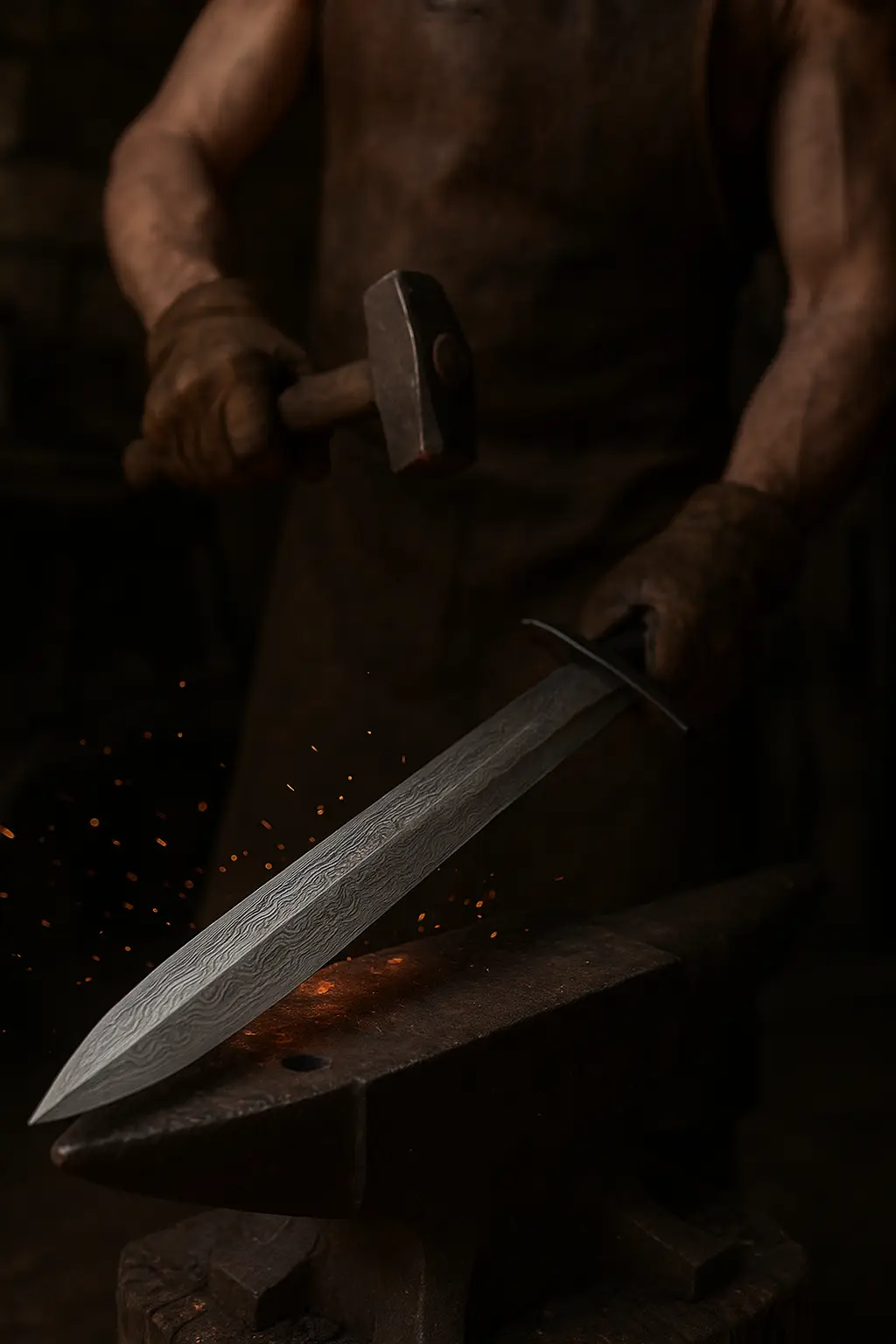
During the Middle Ages, warriors prized Damascus steel for its extraordinary sharpness, flexibility, and distinctive flowing patterns. Swords made from this steel were said to:
- Cut through other blades
- Slice objects with minimal force
- Remain sharp through extensive use
The Mystery
Despite centuries of attempts, the exact technique for forging true Damascus steel was lost by the 18th century.
What Made It Unique
Modern metallurgical studies suggest:
- Advanced heat treatment
- Nanostructures involving carbon nanotubes
- Rare imported ores
Blacksmiths of the time likely guarded their techniques closely, leading to the knowledge disappearing as trade routes shifted.
Traditional Polynesian Wayfinding: Navigation Without Instruments
Long before GPS, compasses, or written maps, Polynesian navigators sailed thousands of miles across the Pacific Ocean using:
- Star paths
- Ocean swells
- Cloud patterns
- Bird migration
- Wind direction
Their voyages connected distant islands such as Hawai‘i, Tahiti, and Aotearoa (New Zealand).
How This Knowledge Was Lost
Colonization, missionization, and cultural disruption caused many traditional wayfinding techniques to fade.
Revival
In the late 20th century, Polynesian navigators revived the ancient knowledge through apprenticeships, preserving one of the most advanced forms of non-instrument navigation in human history.
Conclusion
Lost knowledge represents one of the most fascinating areas of human history — a reminder that technological and intellectual progress is not always linear. Civilizations have achieved extraordinary breakthroughs only for them to vanish through conflict, collapse, or cultural suppression. Whether through ancient engineering feats like the Antikythera Mechanism, enduring materials like Roman concrete, or vast archives like the Library of Alexandria, humanity’s forgotten wisdom tells us how advanced our ancestors truly were.
Modern scientists continue to rediscover fragments of this lost knowledge, reconstructing ancient techniques and learning from systems that were once thought impossible. These discoveries not only deepen our understanding of history but also inspire new innovations today.