Introduction
High in the snowy peaks of the northern Ural Mountains, in a remote region of Soviet Russia, lies the site of one of the most chilling and baffling mysteries of the 20th century. In February 1959, nine young hikers—experienced students from the Ural Polytechnic Institute—set out on a winter expedition. They never returned.
When rescue teams finally reached their campsite weeks later, they discovered a scene so strange and unsettling that even today—more than six decades later—it continues to confound investigators, scientists, and conspiracy theorists alike.
The Dyatlov Pass Incident, named after the group’s leader Igor Dyatlov, has become one of the most enduring unsolved mysteries in modern history. The circumstances surrounding the hikers’ deaths—ripped tents, missing clothing, strange injuries, and an absence of clear motive—have inspired countless theories, from avalanches and military experiments to UFOs and secret weapons testing.
Despite modern re-examinations and scientific studies, the truth remains elusive. What really happened on that freezing February night in 1959?
The Expedition: A Journey into the Unknown
In late January 1959, Igor Dyatlov, a 23-year-old engineering student, organized a ski-hiking expedition to the Otorten Mountain region. His group consisted of nine hikers—seven men and two women—each physically fit, experienced in winter treks, and trained in navigation and survival.
The group included:
- Igor Dyatlov – The leader, an engineering student.
- Zinaida Kolmogorova – A 22-year-old radio engineering student.
- Lyudmila Dubinina – A 20-year-old economics student.
- Rustem Slobodin – A 23-year-old athlete and mechanical engineer.
- Yuri Doroshenko – A physics student known for his bravery.
- Yuri Krivonischenko – An engineering student who worked at a secret nuclear site.
- Alexander Kolevatov – A 24-year-old nuclear physics student.
- Nikolai Thibeaux-Brignolles – A civil engineer.
- Semyon Zolotaryov – A 37-year-old war veteran who joined the group last-minute.
Their goal was to reach Mount Otorten, about 10 kilometers north of where the tragedy occurred. They carried cameras, journals, and supplies for a 16-day trek, carefully documenting their progress in diaries and photographs—many of which survived and later became vital clues.
The Final Camp
On February 1, 1959, the hikers made their final camp on the eastern slope of Kholat Syakhl, a mountain whose name in the local Mansi language ominously means “Mountain of the Dead.”
Why they chose to pitch their tent on the exposed, windy slope remains unclear—most experts believe they lost daylight and decided to camp rather than descend into the nearby forest.
The next day, they were supposed to reach their next checkpoint. When no message arrived, search teams were dispatched. It took over three weeks before rescuers finally located the campsite on February 26.
What they found was both haunting and inexplicable.
The Discovery: A Scene of Chaos
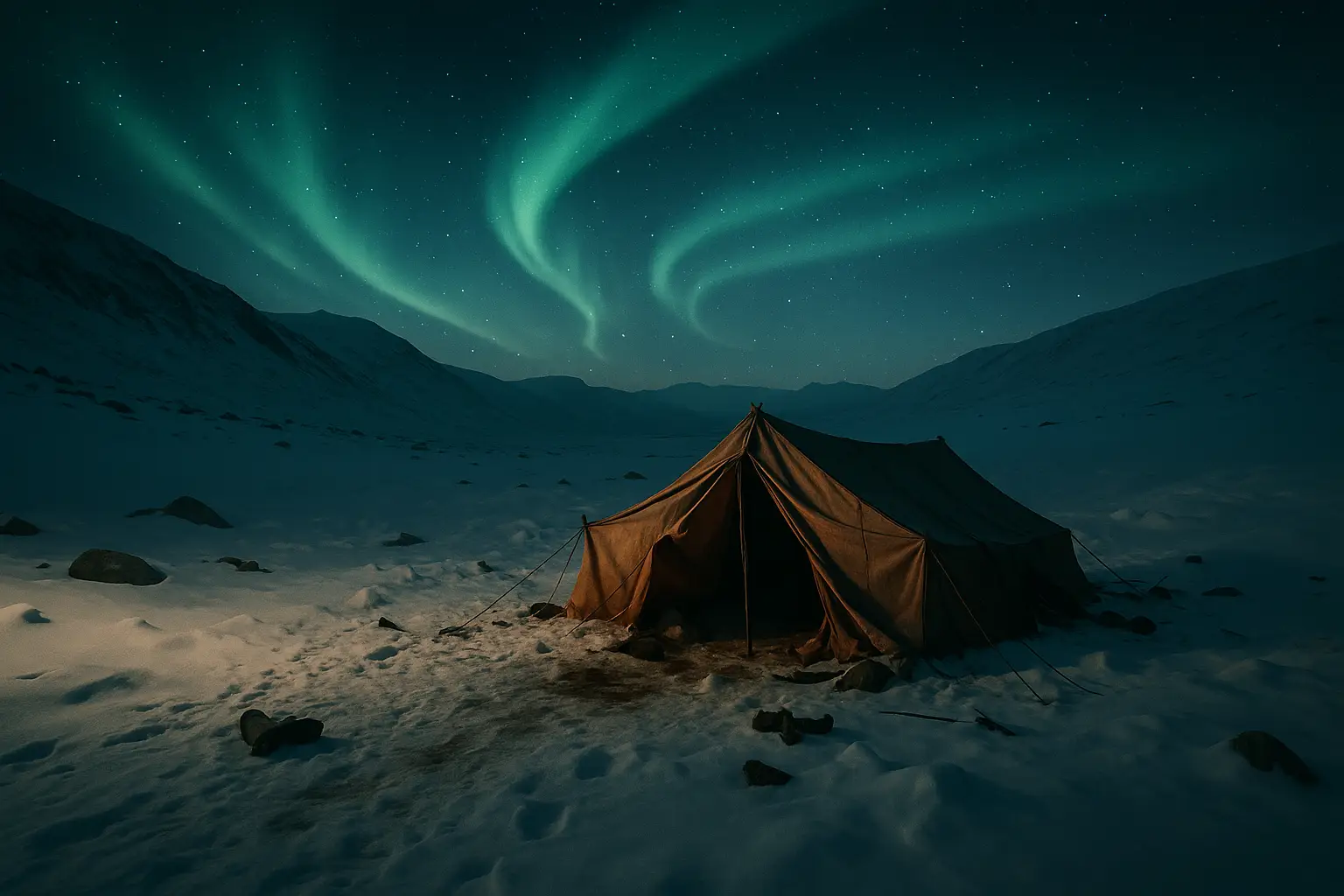
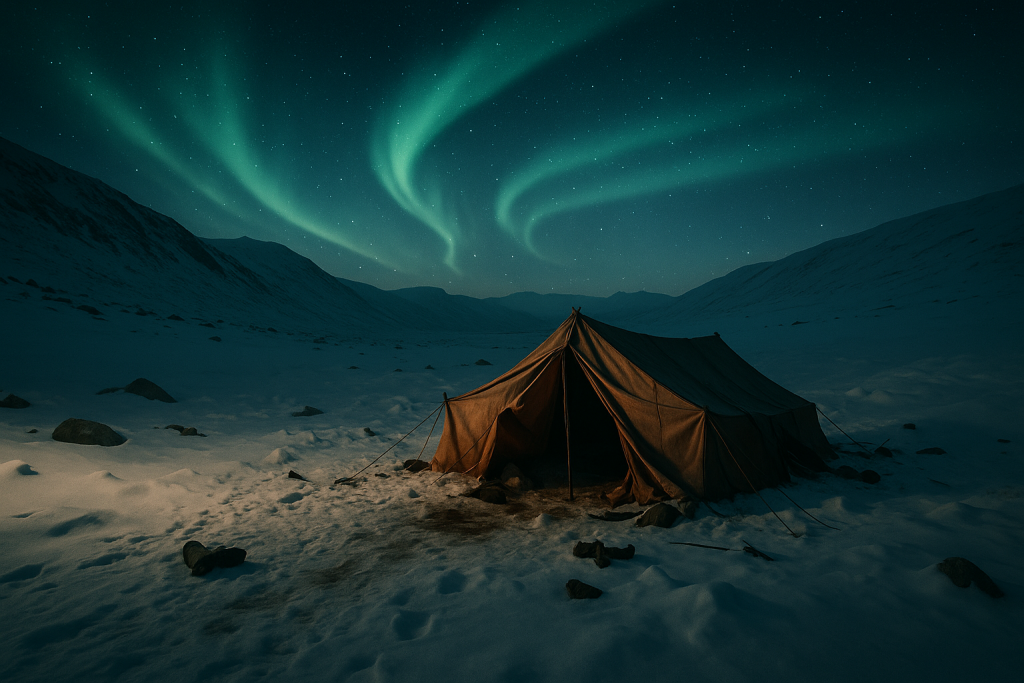
The rescuers found the hikers’ tent partially buried in snow, cut open from the inside, and empty. Their belongings—boots, coats, cameras, and food—were neatly arranged inside, suggesting they fled in a hurry.
Footprints in the snow indicated that the group had walked barefoot or in socks—some only in light underclothes—into the freezing darkness, with temperatures as low as -30°C (-22°F).
About 1.5 kilometers down the slope, rescuers found the first two bodies—Doroshenko and Krivonischenko—lying near the remains of a small fire under a cedar tree. Both were barefoot, clad only in underwear, and had burns on their hands. Nearby branches were broken, as if they had tried to climb the tree—possibly to look back toward the campsite.
Between the cedar and the tent, three more bodies were found—Dyatlov, Kolmogorova, and Slobodin—lying as if they had been trying to return to camp. Dyatlov was clutching a branch; Kolmogorova’s face was turned toward the tent. Slobodin had a fractured skull, though it was not fatal.
It would take another two months, until May 1959, before the final four bodies were discovered deeper in the woods, buried under four meters of snow in a ravine. These were Dubinina, Zolotaryov, Thibeaux-Brignolles, and Kolevatov—and their injuries defied explanation.
The Strange Injuries
When the final autopsies were released, investigators were stunned.
- Thibeaux-Brignolles had a massive skull fracture, equivalent to a high-speed car crash.
- Dubinina had broken ribs, internal bleeding, and her tongue and eyes were missing.
- Zolotaryov also had crushed ribs and was found grinning, his camera slung around his neck.
- Kolevatov had less severe injuries but showed signs of exposure.
Even stranger, traces of radioactive material were found on some of the victims’ clothing—a detail that fueled decades of speculation about military or nuclear involvement.
The official Soviet investigation concluded that the hikers died from “a compelling natural force”, but gave no further explanation. The case was closed, and the files were sealed for decades.
Theories and Speculations
Over the years, countless theories have emerged—some scientific, others more imaginative. Here are the main ones:
1. Avalanche Theory
This is the most widely accepted explanation today.
According to modern research (including a 2021 study in Nature), a small, delayed slab avalanche may have struck the tent, forcing the hikers to cut their way out and flee. Disoriented and underdressed, they likely succumbed to hypothermia while trying to regroup.
However, critics argue that the slope was too shallow for an avalanche, and the tent’s remains were still visible above snow weeks later.
2. Katabatic Wind Hypothesis
Katabatic (or downslope) winds—powerful, sudden gusts of cold air—can reach hurricane strength.
Some experts suggest that a sudden windstorm may have terrified the group, prompting them to escape the tent in panic. Once outside, visibility and coordination collapsed, leading to fatal exposure.
3. Infrasound Panic
A more psychological theory proposes that infrasound—low-frequency sound waves produced by wind around the mountain—could have caused intense panic and disorientation.
This “infrasound-induced panic” theory, proposed by researcher Donnie Eichar, suggests the hikers fled in a state of irrational fear caused by natural vibrations.
4. Military or Secret Weapons Testing
Given the area’s proximity to Soviet military zones, some theorists believe the group accidentally witnessed a weapons test—perhaps a parachute mine explosion or radiation experiment—leading to their deaths and subsequent cover-up.
The glowing “orange orbs” reported in the sky by other hikers that night added fuel to this theory.
5. UFO or Paranormal Explanations
More fringe theories suggest extraterrestrial encounters or even Yeti attacks, based on the hikers’ torn clothing and strange injuries. While no physical evidence supports these claims, they persist in popular culture, highlighting the mystery’s enduring grip on imagination.
Declassified Files and Renewed Investigation
For decades, Soviet authorities kept the Dyatlov case files classified, feeding rumors of a cover-up. It wasn’t until the late 1980s and 1990s, during the era of glasnost (openness), that researchers gained access to official documents and survivor diaries.
In 2019, the Russian Prosecutor General’s Office reopened the case, examining 75 possible scenarios. By 2020, they reaffirmed the avalanche theory, stating that the group fled after a snow slide partially buried the tent, and died of hypothermia.
However, many researchers remain unconvinced. The lack of typical avalanche debris, the distance the group traveled, and the unusual injuries leave lingering doubts.
What Remains Today
The site of the tragedy is now officially known as Dyatlov Pass, named in honor of the expedition’s leader. A stone memorial stands at the base of the mountain, bearing the names of the nine hikers.
Each year, adventurers retrace their route, leaving flowers at the site and paying tribute to the lost souls who perished under the stars.
In 2013, the last surviving member of Dyatlov’s hiking club, Yuri Yudin, who had turned back early due to illness, died at age 75. He spent his life haunted by the question of what happened to his friends, once saying, “If I had not fallen ill, I would have died with them.”
Cultural Legacy
The Dyatlov Pass Incident has inspired:
- Books, such as Dead Mountain by Donnie Eichar.
- Documentaries like An Unknown Compelling Force (2021).
- Films, including The Dyatlov Pass Incident (2013).
It has become a symbol of the Cold War’s secrecy, a cautionary tale about the dangers of nature, and a modern myth that continues to fascinate those drawn to the unexplained.
The mystery endures not because of aliens or conspiracies, but because it touches something deeply human — our fear of the unknown and our drive to uncover the truth, no matter how distant or cold.
Conclusion
More than sixty years later, the Dyatlov Pass Incident remains one of the most haunting enigmas in modern history. The hikers were young, bright, and full of promise, embarking on a journey of adventure — not knowing it would end in tragedy.
The physical evidence offers partial answers, yet none that fully explain the terror that drove them from their tent that night. Whether felled by an avalanche, a freak wind, or something still beyond understanding, the Dyatlov hikers left behind a legacy of courage and curiosity.
In the end, their story is not just about death — it’s about humanity’s enduring confrontation with mystery itself.